
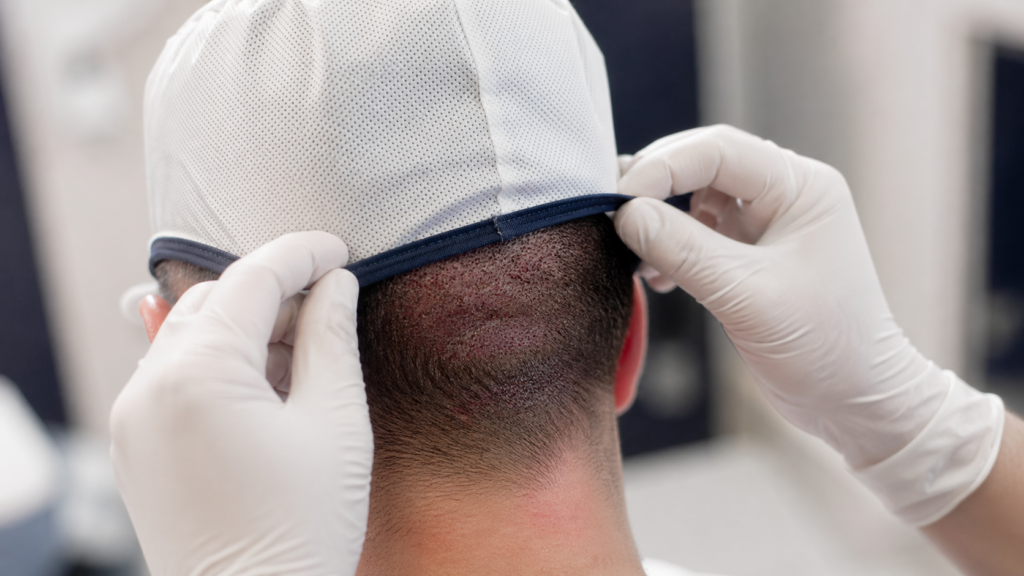
Wearing a hair transplant hat is a primary concern for patients who wish to conceal surgical marks or protect their scalp from the sun. While you might want to cover your head immediately, doing so too early can destroy your results. The first few days of recovery are the most important for graft anchoring. Any pressure or rubbing from a cap can pull the new follicles out before they have a chance to take root.
A clear timeline for when headwear is safe is necessary for a successful outcome. Most people want a hat to hide scabs and redness, but your priority must be graft survival. For UK patients coming to our specialist clinic in Delft, managing your headwear during the travel home is part of the recovery plan. This guide explains the safety rules for different hats and exactly when you can start using them.
Hat use is only one element of the recovery period, and the complete protocol is covered in our aftercare guide.
When Can I Wear A Hat After Hair Transplant?
The general rule is to wait at least ten days before putting anything on your head that touches the recipient area. This is because the grafts are not yet fysiologically anchored in the scalp. During the first week, those follicles are very delicate. They sit loose in the new channels and even a light touch can displace them.
After ten days, most grafts are rooted and the risk of pulling them out accidentally goes down. Even then, you must be careful about the type of hat you pick. You should start with very loose headwear that does not put direct pressure on the transplanted hair. You should wait a full two weeks before wearing tighter baseball caps or beanies.
Why Immediate Headwear Is Dangerous For New Grafts
The biggest risk of wearing a hat too soon is graft compression. A tight hat can crush the delicate follicles and cut off their blood supply. Since your results depend on the survival of every single graft, any pressure can leave you with thin or patchy results.
| Recovery Phase | Safe Hat Type | Graft Safety Status |
|---|---|---|
| Day 1 to 6 | No hat allowed | Extremely Delicate |
| Day 7 to 10 | Very loose fisherman hat | Partially Anchored |
| Day 11 to 14 | Adjustable baseball cap | Mostly Secure |
| Day 30+ | Beanies and winter hats | Fully Anchored |
| Day 45+ | Hard hats and helmets | Safe for Pressure |
Friction is another danger. When you put a hat on or pull it off, the fabric rubs against the scabbing. If a hat pulls off a scab too early, it usually takes the hair graft with it. This causes permanent bald spots in your new hairline. Keeping your scalp open to the air also helps the scabs dry out and fall off naturally.
Selecting Safe Headwear At Each Stage Of Recovery
Not every hat is safe for a healing scalp. In the beginning, you need something that stays far away from the recipient area. A loose fisherman style hat or a wide brimmed sun hat is usually the best choice because the fabric does not sit on the hairline.
Using Loose Adjustable Caps
After 10 days, you can wear a baseball cap if you keep it on the loosest setting. You must be careful when putting it on to avoid scraping the top of your head. It is better to place the front of the cap on your forehead and gently lower the back without sliding it across the grafts.
Avoiding Beanies And Tight Knitwear
Do not wear wool or tight beanies for at least 30 days because they cling to the skin. The fibers in wool can hook onto scabs and pull them out. Tight knitwear also creates too much friction when you move your head. Stick to soft, breathable cotton fabrics to stop your head from sweating.
Traveling Back To The UK Without Covering Your Scalp
Many of our patients at Hairtec Delft travel back to the UK right after their surgery. We know that walking through Schiphol Airport or sitting on a flight can make you feel self conscious. Even so, we tell you not to wear any hat on your journey home for the first two days.
Airports and planes have very dry air and a high risk of someone accidentally bumping into you. A hat can also hide swelling or bleeding that our team needs to know about. If you are worried about how you look, remember that the long term result is more important than a few hours of travel. Once you are back home in the UK, keep your scalp uncovered so it can heal without being disturbed.
Risks Of Heat And Sweat Buildup Under Tight Caps
Tight headwear causes heat and sweat to build up on the scalp. This is a major risk for infection. A tight hat traps moisture against the skin and creates a place for bacteria to grow. This leads to folliculitis, which is an inflammation that can kill off your new grafts.
If you have to wear a hat for a short time after the first week, make sure it is breathable. Take it off as soon as you are indoors. You should also check the inside of the hat for any blood or discharge. If you see anything, it means the hat is rubbing against your grafts and you should stop wearing it immediately.
Long Term Scalp Protection And Sensitivity
Hats are dangerous in the beginning, but they are necessary for sun protection later on. Your new grafts and the skin around them are very sensitive to UV rays for several months. A sunburn on a healing scalp can cause permanent skin color changes and damage the follicles, leading to thin growth.
Sun Exposure And UV Protection Guidelines
After the first two weeks, wearing a loose hat when you are outside is a smart move. Sunscreen is usually not allowed for the first month, so a hat is your best defense. You must keep the scalp protected from direct sunlight for at least six months to avoid pigmentation issues. Just make sure the brim does not rub against the specific areas where the hair was planted.
How To Handle Social Situations While Healing
If you have to go back to work or a social event, you might want to hide the scabs. While a hat is okay after ten days, there are better ways to manage your look. Keeping your scalp clean and following our washing guide will help the scabs fall off faster. This makes the transplant much less noticeable to others.
If you use a hat to hide the surgery, do not wear it all day. Take it off every hour to let your scalp breathe. Always look at the inside of the cap to make sure no scabs are sticking to the fabric. If you feel any itching or pain while wearing the hat, it is a sign that your scalp needs more air.
Boutique Post Operative Care At Hairtec Delft
At Hairtec, we focus on the specific fysiologische needs of our patients. Because our UK patients travel to our clinic in Delft, we give you clear instructions on travel and headwear. We care more about your grafts surviving than about temporary camouflage.
Our team is available for digital check ups if you are not sure if your scalp is ready for a hat. We suggest sending us clear photos of your healing before you start wearing a cap for a long time. By following our professional advice, you can make sure your recovery in the UK is as successful as the surgery in the Netherlands.
Frequently Asked Questions About Wearing A Hat After Surgery
Can I wear a hoody instead of a hat after my transplant?
A loose hoody is often safer than a hat because it does not touch the scalp directly. You must be very careful when putting it on or taking it off.
Is it safe to wear a bandana after 7 days?
No bandana has to be tied tight against the skin which can pull out your grafts. It creates too much friction for a healing scalp.
What should I do if my hat feels tight on my head?
Take it off right away if it feels tight or leaves a mark on your forehead. This pressure blocks the blood flow that your new grafts need to survive.
Can I wear a hat if I only had a hairline transplant?
The same rules apply to every patient regardless of the size of the transplant. The grafts in the hairline are the most visible and need the most protection.
Does wearing a hat cause the new hair to fall out?
Wearing a hat too early can make the grafts fail before they grow. It will not cause hair loss once the hair is fully grown and secure.
Can I wear a swimming cap after my hair transplant?
You should wait at least six to eight weeks before wearing a tight swimming cap. The material pulls on the skin and can damage the follicles.
Will a hat protect me from infection at the airport?
No, a hat actually makes infection more likely by trapping sweat and bacteria. It is safer to leave the scalp open to the air during travel.
How we reviewed this article:
Hairtec.co.uk has strict sourcing guidelines and relies on peer-reviewed studies, academic research institutions, and medical journals and associations. We only use quality, credible sources to ensure content accuracy and integrity. You can learn more about how we ensure our content is accurate and current by reading our editorial policy.
- Bernstein RM, Rassman WR (2006). Graft anchoring in hair transplantation. Dermatologic Surgery https://doi.org/10.1111/j.1524-4725.2006.32033.x
- Vañó-Galván S, Bisanga CN, Bouhanna P et al. (2023). An international expert consensus statement focusing on pre and post hair transplantation care. Journal of Dermatological Treatment https://doi.org/10.1080/09546634.2023.2232065
Our experts continually monitor the health and wellness space, and we update our articles when new information becomes available


