
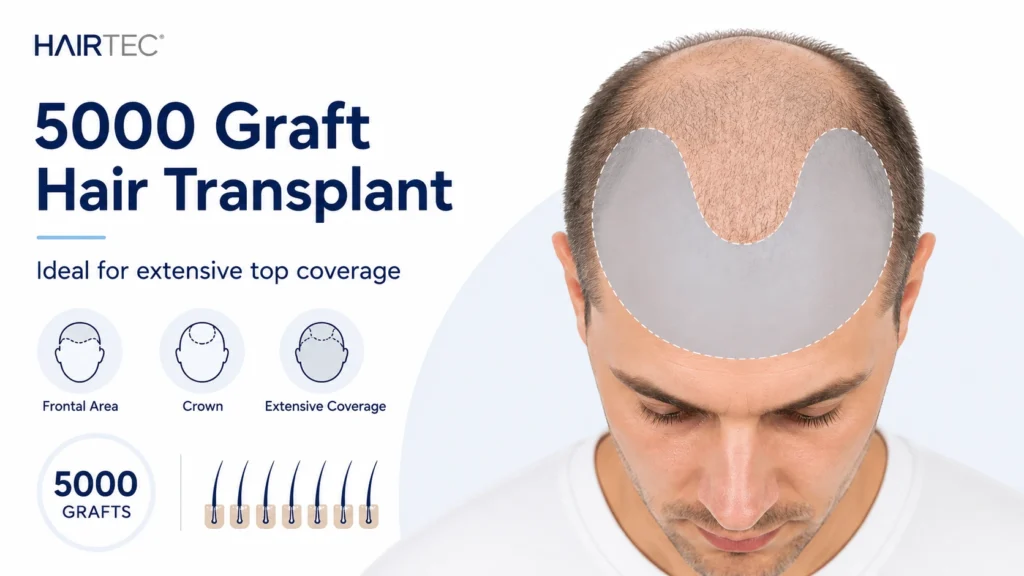
Restoring hair density for extensive baldness requires a high-volume medical strategy known as a mega session. A 5000 graft hair transplant moves thousands of healthy follicular units to cover large areas of the scalp. It typically targets the hairline, mid-scalp, and crown at the same time. This procedure provides a definitive solution for individuals at advanced stages of hair loss who need a major change in a single surgical intervention.
Hairtec provides a highly structured, cross-border medical pathway. Initial diagnostic assessments happen entirely online. You do not need to visit a physical clinic in the UK. After confirming your surgical suitability digitally, you travel directly to our state-of-the-art Delft clinic in the Netherlands. Strict European medical standards govern the entire surgical execution. This provides a safe platform for permanent hair restoration.
The Biological Scope of a 5000 Graft Mega Session
A 5000 graft hair transplant is a complex clinical undertaking. It involves moving a huge amount of biological material. When doctors discuss 5000 grafts, they are focusing on relocating approximately 10,000 to 12,500 individual hair shafts. Patients classified as Norwood Scale 5 or 6 typically require this volume. At these stages, hair loss has progressed significantly across the top of the head.
| Feature | Clinical Specification |
|---|---|
| Graft Count | 5,000 Follicular Units |
| Individual Hair Count | Approx. 10,000 to 12,500 hairs |
| Scale Suitability | Norwood 5 and 6 (Advanced Thinning) |
| Package Category | XL Package |
| Preservation Method | ATP-enriched Bioactive solution |
Follicular Unit Density and Coverage
Clinical success depends heavily on the density of the transplanted area. In a 5000 graft procedure, the goal is to achieve an average density of 35 to 45 follicular units per square centimetre. This provides an appearance of fullness while maintaining a healthy blood supply to the newly implanted roots. Pushing density beyond biological limits in a single session can cause tissue necrosis. Medical specialists calculate the exact safe capacity for your scalp.
The Role of Micro-Surgical Graft Sorting
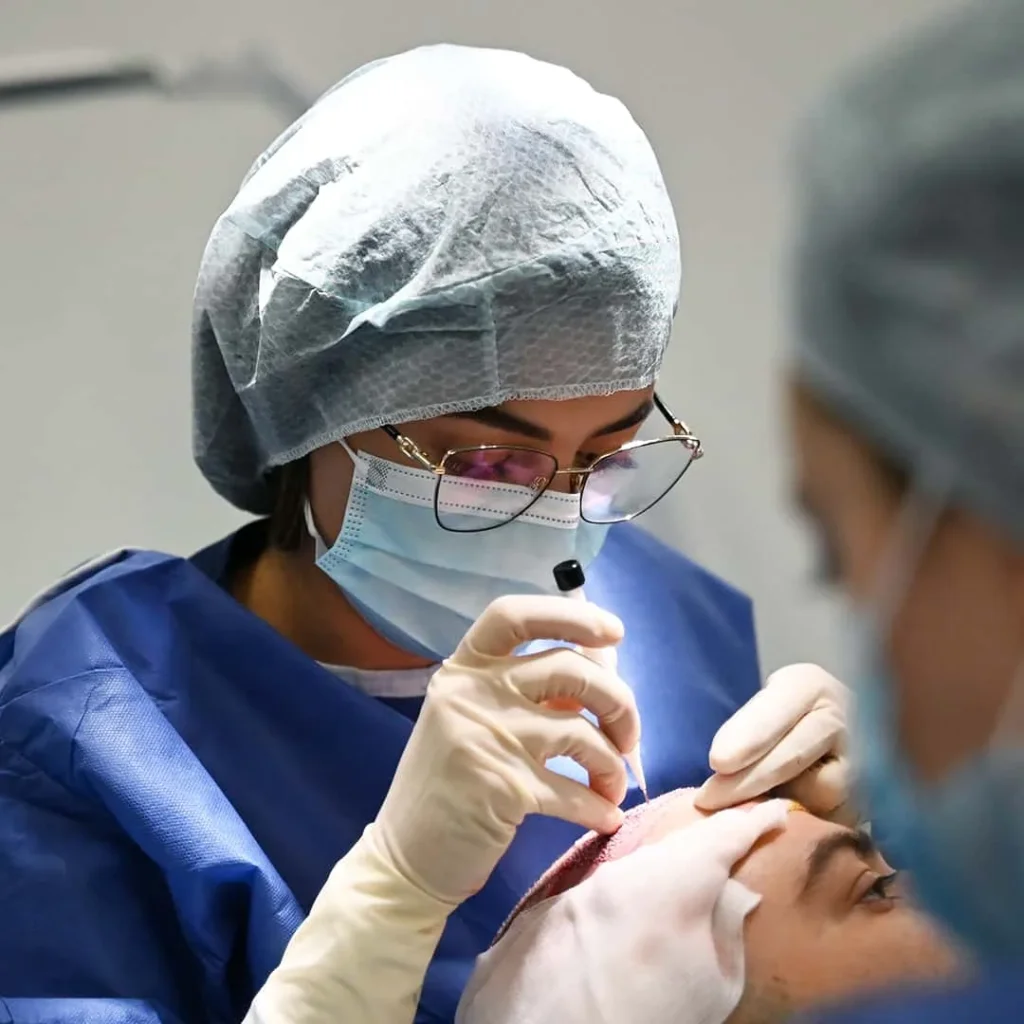
Extracting 5000 grafts is only the first step. The real clinical expertise lies in the sorting process. Clinical assistants conduct this sorting under high-powered microscopes. Specialists in Delft categorise every single graft into specific biological groups:
- Single-Hair Grafts: Reserved exclusively for the first rows of the frontal hairline. This creates a soft, undetectable transition.
- Multi-Hair Grafts: Double and triple hair units go into the mid-scalp and crown. This builds the necessary visual volume.
- Selection Strategy: Strategically separating these units increases the total hair count. It does this without requiring extra harvesting from the donor area.
Technical Challenges in High-Volume Extractions
Extracting high volumes requires a strict approach to donor management. Dutch medical specialists follow a specific extraction protocol to protect your native density. This prevents visible thinning or a patchy appearance in the back of your head.
- Micro-Surgical Tools: Clinical staff utilise ultra-fine microscopic punches. These range between 0.7 mm and 0.9 mm in diameter.
- Tissue Protection: Smaller incisions speed up healing. They also reduce the risk of visible white dot scarring in the donor zone.
- Scattered Harvesting: Specialists harvest follicles in a distributed pattern across the entire safe donor zone. They never concentrate extractions in one small area.
Minimising the Transection Rate and Fatigue
A critical metric in a 5000 graft procedure is the transection rate. This refers to the number of follicles damaged or cut during extraction. High-volume sessions carry a higher risk of specialist fatigue. Hairtec manages this by utilising rotating teams of BIG-registered specialists in Delft. This keeps the physical execution precise from the first graft to the five thousandth.
Is Your Donor Area Strong Enough for 5000 Grafts?
A high-volume procedure is only possible if your donor area has sufficient follicular density. During your secure online assessment, medical staff use your submitted images to calculate your exact donor capacity. This confirms that removing 5000 follicles will not leave the back of your head looking sparse.
Calculating the Safe Extraction Limit
The Safe Donor Zone is the area at the back and sides of the head where hair resists balding hormones. Clinicians calculate exactly how many follicles they can remove safely. If your donor density is too low, they will advise a lower graft count. Protecting your aesthetic integrity is always the priority.
Assessing Hair Calibre and Scalp Laxity
The thickness of the individual hair shafts plays a major role in the final visual result. Scalp laxity determines the flexibility of the tissue. Patients with thicker hair (high calibre) and good scalp elasticity achieve better visual coverage with 5000 grafts than those with very fine hair. Online diagnostics flag these variables early.
Implantation Strategy: The Art of Distribution
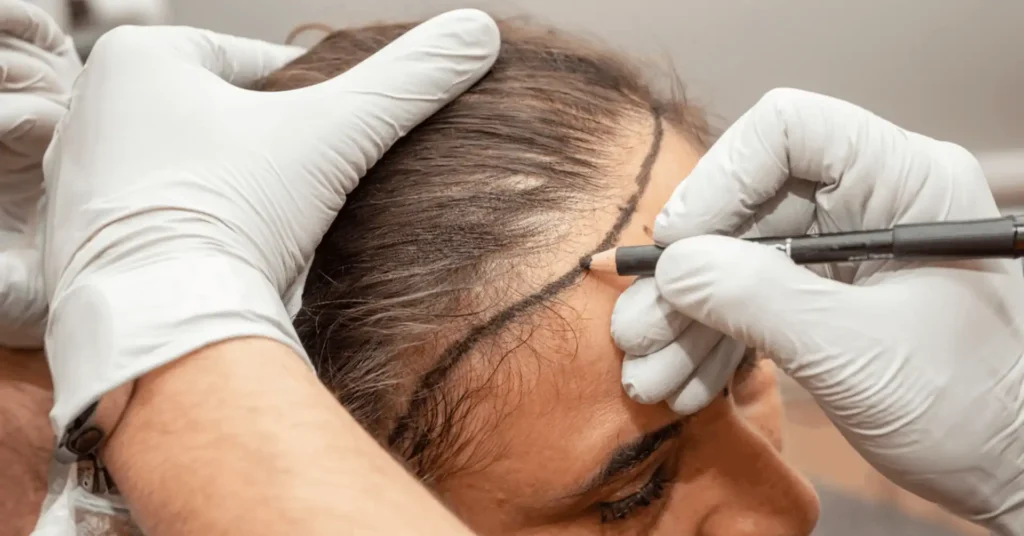
For a 5000 graft procedure, the medical team must balance the distribution of follicles. They split the volume between the hairline, mid-scalp, and crown. Strategic placement creates the illusion of full density across a wide area.
- Hairline Reconstruction (1,500 to 2,000 Grafts): The frontal hairline requires single-hair grafts for the first few rows. The angle is usually kept extremely low, around 15 to 30 degrees, pointing forward. Multi-hair grafts sit behind this initial line to provide immediate volume.
- Mid-Scalp and Bridge (1,500 to 2,000 Grafts): This area acts as a bridge. It receives a significant allocation to stop visible gaps when viewed from above. The angle shifts slightly upward to match native growth.
- Crown Restoration (1,000 to 1,500 Grafts): The crown has a circular growth pattern known as the whorl. Specialists place grafts in a precise spiral formation to mimic this natural geometry. It requires intense focus to prevent a tufted appearance.
| Scalp Region | Clinical Goal | Technique |
|---|---|---|
| Frontal Hairline | Frame and Definition | Single Hair Focus |
| Mid-Scalp | Volume and Transition | Multi-Hair Grouping |
| Crown (Vertex) | Whorl Reconstruction | Spiral Placement |
DHI vs. Sapphire FUE for 5000 Grafts
Choosing the right technique is vital for a mega session. The choice depends on your specific hair type, your scalp elasticity, and the desired density. Both methods use the exact same micro-extraction protocol. The difference is how the follicles go back into the scalp.
The DHI Advantage for Mega Sessions
Direct Hair Implantation (DHI) works extremely well for high-density requirements. A specialised Choi Implanter Pen places the follicles directly into the scalp without pre-cut channels.
This reduces tissue trauma. It provides superior control over angulation. Follicles also spend significantly less time outside the body. This reduced ischemia time improves the overall survival rate.
Sapphire FUE for Maximum Surface Area
For patients needing absolute maximum coverage across a very large surface area, Sapphire FUE is a robust clinical choice. Sapphire blades create incredibly fine, V-shaped incisions. This facilitates faster healing and reduces post-operative crusting compared to old steel blades. It is highly effective for the mid-scalp where broad coverage is the main objective.
The Science of Graft Survival and Storage
Follicles are outside the body for several hours during a mega session. Preventing cellular damage is critical for success. This period outside the body is known as ischemia time.
- Temperature Management: Clinical protocols include constant monitoring of the storage environment. The follicles are kept at a strictly controlled 4 degrees Celsius.
- ATP-Enriched Solutions: Bioactive storage solutions enriched with Adenosine Triphosphate (ATP) keep the follicles healthy. ATP provides the cellular energy needed to survive outside the blood supply.
- Recipient Area Preparation: Specialists utilise biological growth factors to prepare the recipient area. This provides a nutrient-rich environment for the newly implanted grafts during the crucial first 72 hours of anchoring.
Realistic Clinical Success Rates
Unregulated clinics often promise total graft survival to secure a booking. Biologically, that is impossible.
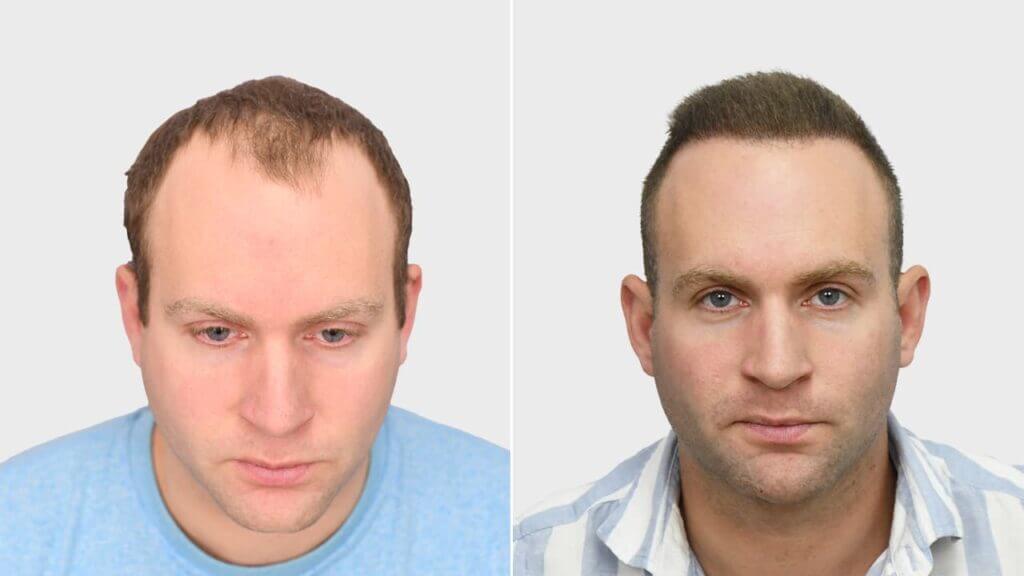
Hairtec states the clinical reality clearly. The success rate for mega sessions typically ranges between 70% and 85%. This percentage represents the number of transplanted follicles that will successfully anchor, survive the shedding phase, and produce permanent terminal hair.
This 70% to 85% range is a highly realistic, scientifically backed outcome. It applies to patients who strictly follow the prescribed post-operative care rules. Variables such as your native blood circulation and adherence to lifestyle restrictions directly impact this final percentage.
The Hairtec Online-to-Delft Medical Model
Hairtec provides UK patients with a structured, cross-border healthcare protocol. It prioritises medical safety and clinical results over local office visits.
Secure Online Diagnostics
Your clinical evaluation begins remotely. Hairtec does not operate a physical consultation office in the UK. Instead, clinical staff conduct a highly structured online consultation.
- Image Submission: You submit specific, well-lit images of your front, top, crown, and donor areas.
- Medical History: You provide a detailed health background via a secure digital portal.
- Digital Review: Medical specialists review your specific case digitally.
- Bespoke Planning: They calculate your exact graft requirements, confirm your donor capacity, and design a treatment plan.
Strict Dutch Medical Standards
Once your online assessment is approved, you travel to the Delft clinic. The Netherlands enforces extremely rigorous healthcare regulations.
- Registered Professionals: Your surgery is performed exclusively by experienced, in-house medical teams. They are officially registered on the BIG-register.
- The One Patient Rule: The clinic adheres to a strict daily limit. One specialist treats one patient per day.
- Undivided Attention: The specialist working on you does not jump between rooms or manage other surgeries. This strict focus eliminates surgical fatigue.
The Lifetime Growth Guarantee
Hairtec guarantees that the successfully transplanted hair will grow and remain permanently. This assumes your general health stays stable. This level of medical accountability serves as the ultimate proof of confidence in the Dutch clinical standards.
5000 Grafts Hair Transplant Cost: UK vs. The Hairtec XL Package
When researching costs, patients often encounter huge price discrepancies. Many UK clinics charge on a per graft basis. This pricing model can lead to final invoices exceeding £15,000 for a 5000 graft mega session. They also frequently add hidden costs for post-operative washes and medications.
Hairtec operates on a transparent, fixed-fee model. Because 5000 grafts fall into the XL Package category, the price is determined during your online assessment and remains unchanged. This allows for clear financial planning without the risk of unexpected clinical fees.
| Pricing Factor | Typical UK Clinic | Hairtec (XL Package) |
|---|---|---|
| Average Cost | £12,500 – £18,000 | Fixed XL Package Rate |
| Pricing Model | Per Graft / Variable | Fixed / All-Inclusive |
| Travel & Hotel | Not Included | Included in Package |
| Aftercare Kits | Often Extra Charge | Included |
| Specialist Status | Variable Regulation | BIG-Registered (Netherlands) |
Frequently Asked Questions About 5000 Grafts
How much is 5000 grafts hair transplant in total?
The total cost is determined by your specific hair type and the required technique. At Hairtec, this falls under the XL Package. You receive a final fixed quote during your digital consultation. This includes flights, accommodation, VIP transfers, and the surgery.
Is 5000 grafts a safe limit for one session?
Yes, provided the donor area is dense enough. BIG-registered specialists monitor the extraction ratio carefully to maintain a natural look in the donor area. They calculate the safe limit mathematically to prevent over-harvesting.
Will I need a second transplant after 5000 grafts?
For most Norwood 5 or 6 patients, 5000 grafts provide a definitive transformation. If genetic hair loss continues in non-treated areas later in life, a smaller maintenance session may be discussed in the future.
Why do I need to travel to the Netherlands for 5000 grafts?
The Netherlands provides a strictly regulated medical environment. BIG-registered specialists perform the procedures. This provides the highest surgical standards for high-volume procedures, far exceeding unregulated local clinics.
Can I have 5000 grafts if my hair is very fine?
This depends entirely on your donor density. The visual result might differ for fine hair compared to coarse hair. Clinical staff will provide a realistic projection during your online diagnostic assessment.
How is pain managed during such a long procedure?
Specialists utilise an advanced local anaesthesia protocol designed for prolonged comfort. The initial injections cause minor discomfort, but the scalp goes completely numb. You also get regular breaks throughout the day.
How we reviewed this article:
Hairtec.co.uk has strict sourcing guidelines and relies on peer-reviewed studies, academic research institutions, and medical journals and associations. We only use quality, credible sources to ensure content accuracy and integrity. You can learn more about how we ensure our content is accurate and current by reading our editorial policy.
- Gabel S (2013). Megasessions: surgical indications and technical perspectives. Facial Plastic Surgery Clinics of North America https://pubmed.ncbi.nlm.nih.gov/24017983/
- Parsley WM, Perez-Meza D (2010). Review of factors affecting the growth and survival of follicular grafts. Journal of Cutaneous and Aesthetic Surgery https://pmc.ncbi.nlm.nih.gov/articles/PMC2956960/
Our experts continually monitor the health and wellness space, and we update our articles when new information becomes available


