Hairtec Hair Transplant Clinic

Facial hair density serves as a primary indicator of masculinity and personal style for many men. Genetic factors, scarring, or medical conditions often lead to patchy growth or a total absence of hair in the jaw and cheek areas. A beard hair transplant provides a permanent medical solution by relocating living follicles to the face to create a fuller and more defined appearance.
This procedure utilizes the same biological principles as scalp restoration but requires a much higher level of anatomical precision. The skin on the face is thinner and more visible than the scalp, meaning any surgical intervention must be performed with absolute technical accuracy. Successful results depend on the ability of the medical team to match the natural exit angles of facial hair.
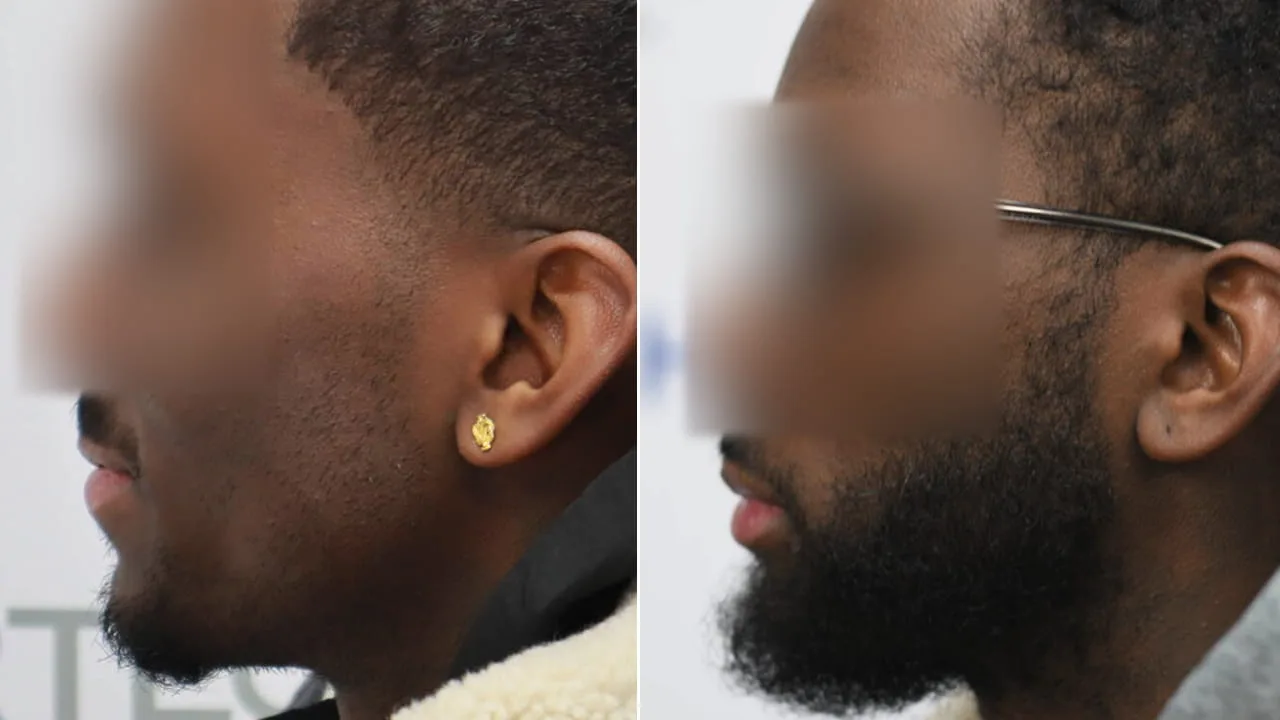
A beard hair transplant relocates healthy follicles from the donor zone of the scalp into sparse or patchy regions of the cheeks, jawline, chin and moustache. The procedure produces a permanent naturally angled growth pattern that integrates seamlessly with existing facial hair.
Individuals with patchy facial hair or those who cannot grow a beard due to genetics often ask can you get a hair transplant for beard. The clinical answer is yes. Modern restoration techniques have evolved to allow for the safe and effective movement of follicles to the cheeks, chin, and mustache areas.
The suitability for this surgery depends on the availability of donor hair and the health of the facial skin. Most men are excellent candidates for this procedure as long as they have a stable supply of hair at the back of the head. The surgery is effective for filling small patches as well as constructing a full beard from a completely smooth surface.
Before undergoing surgery, a clinical evaluation determines if a patient can get beard hair transplant based on their skin type and hair density. If the thinning is caused by an active autoimmune condition, the medical team may advise waiting until the condition is in remission.
Patients must have a healthy donor area at the back of the head. Even though the number of follicles required for a beard can be high, the quality of these grafts determines the final aesthetic outcome. Coarse hair is generally preferred for beard reconstruction to match the existing facial hair texture.
Patients must understand that the transplanted hair will behave like the hair from the donor site. This means the new beard will grow at the same rate as the hair on the head and will require regular trimming. The biological success rate for these procedures is exceptionally high due to the rich blood supply found in the facial region.
| Patient Requirement | Clinical Solution | Expected Result |
|---|---|---|
| Patchy Cheeks | Targeted FUE extraction | Uniform density across the face |
| Scar Concealment | Implantation into scar tissue | Natural camouflage of skin damage |
| Full Beard Construction | High volume graft relocation | Complete facial hair coverage |
Achieving a natural look on the face requires a different technical approach than a standard scalp procedure. The orientation of the hair follicles on the jawline is complex and changes direction several times across the chin and cheeks. Every graft must be placed manually to ensure it follows these natural patterns.
The surgical process begins with a detailed mapping of the face. The surgeon marks the boundaries of the new beard, taking care to respect the patient bone structure and facial symmetry. This blueprint ensures the final result looks like it has always been part of the natural appearance. The design includes the neckline, the cheek line, and the connection to the sideburns.
The angle at which the hair emerges from the skin is the most critical factor in facial restoration. Facial hair typically grows at a much flatter angle than scalp hair. If the grafts are placed too vertically, the beard will look stiff and unnatural. Surgeons use specialized micro tools to create entry points that mimic the sweeping direction of natural beard growth.
Once the follicle is placed in the facial skin, it begins the process of biological integration. The rich vascular network of the face provides immediate nutrients to the graft. This accelerated blood supply is why beard transplants often have higher survival rates than scalp procedures. The medical team monitors the healing of these entry points to ensure no visible scarring remains.

A successful beard hair transplant restores not just hair but the underlying facial proportion that defines a masculine profile. The procedure addresses patchy growth, scarring, and complete absence of beard hair by relocating individual follicular units from the donor area at the back of the scalp.
Hairtec follows a meticulous planning protocol where each graft is placed at the exact angle of natural facial hair growth: typically downward at the cheeks, outward along the jawline, and slightly upward beneath the chin. The result is a beard that grows, behaves, and trims like native facial hair.
A common point of inquiry involves the source of the new facial hair. Patients frequently ask where do they get the hair for beard transplant and whether the texture will match their existing facial hair. The donor site is almost always the back or sides of the scalp, which provides a dense and permanent supply of follicles.
When determining what hair is used for beard transplant, surgeons prioritize follicles that contain only one or two hairs. Naturally, beard hair grows in single strands, unlike the clusters of three or four hairs often found on the scalp. Selecting these individual units is essential for creating a realistic texture on the cheeks and neckline.
The follicles are extracted using Follicular Unit Extraction (FUE) to ensure no linear scarring is left in the donor area. Once removed, the hair is sorted under high power magnification. Only the strongest follicles are selected for relocation to the face. This sorting process ensures the highest possible survival rate once the grafts are implanted.
The medical team ensures that the extraction is scattered evenly across the donor zone. This prevents any visible thinning at the back of the head. Because the number of grafts for a full beard can reach 3000, maintaining donor health is a primary clinical objective throughout the session.
Patients who want an indication of the graft count before their consultation can use the beard graft calculator for a quick estimate.
There are two primary techniques used to achieve density in the beard area. Both Follicular Unit Extraction (FUE) and Direct Hair Implantation (DHI) offer distinct advantages depending on the patient goals.
FUE involves extracting the hair and then creating microscopic channels in the face before implantation. This method is often utilized when a high volume of grafts is needed to cover a large area, such as a full beard reconstruction. It allows the surgeon to work efficiently while maintaining a high level of precision.
DHI utilizes a specialized pen tool to extract and implant the hair in a single movement. This is often preferred for beard restoration because it allows for total control over the angle and depth of each hair. DHI is particularly effective for filling small patches or refining the borders of an existing beard.
| Comparison Point | FUE (Follicular Unit Extraction) | DHI (Direct Hair Implantation) |
|---|---|---|
| Tool Used | Sapphire or steel micro blades | Choi Implanter Pen |
| Process | Two step process | One step direct implantation |
| Best For | High graft counts | Precision and border definition |
| Recovery | Standard healing period | Slightly faster visual healing |

Many individuals research beard hair transplant uk to find local options. While the UK market has established practitioners, a growing number of patients choose to travel to the Netherlands to benefit from the strict Dutch medical framework.
The medical regulations in the Netherlands are among the most demanding in Europe. This focus on data driven results and follicle safety attracts patients who are looking for a premium experience. Traveling from London to Delft is a common pathway for those who prioritise technical discipline.
Dutch clinics focus on a medical first philosophy. This means every surgical step is designed around the biological health of the patient rather than commercial volume. International patients receive rigorous care, supported by specialized logistics and aftercare portals that ensure constant communication with the medical team.
Facial hair restoration requires a different level of clinical expertise than scalp procedures. Hairtec applies a disciplined Dutch medical protocol that prioritises facial anatomy and follicle survival.
The facility in Delft operates under the most demanding medical standards in Europe. Every tool used in the extraction and implantation phases is selected for its ability to minimize tissue trauma. This focus on surgical precision leads to faster healing times and more predictable growth patterns for the patient.
Every follicle extracted during a session is treated with specialized nutrient solutions. Keeping the hair viable while it is outside the body is essential for a successful beard hair transplant. The team utilizes high resolution microscopy to ensure only the most resilient single hair follicles are used for the facial area.
For patients traveling from abroad, the entire process is managed with professional care. This includes VIP airport transfers, premium accommodation, and a structured aftercare plan. The focus remains on providing a permanent and natural result through a disciplined and evidence based surgical process.

Investing in facial restoration involves several financial variables. The beard hair transplant cost is calculated based on the complexity of the design and the total number of follicles required to reach the desired density.
The final beard hair transplant price is influenced by the technical demands of the session. Because facial skin is delicate, the surgeon must work with more focus than during a standard scalp procedure.
A standardized price often ignores the individual requirements of facial symmetry and hair texture. A secure digital consultation is the most effective way to calculate how much a specific restoration will cost based on hard clinical data.
The newly transplanted hair will shed within the first month. This is a normal part of the process. New, permanent growth begins around the third month, with final density achieved after one year.
The surgery is performed under advanced local anaesthesia. This numbs the face and donor area completely. Patients feel no pain during the extraction or implantation phases.
The follicles are extracted in a scattered pattern. This ensures that the donor density remains consistent and that no visible gaps are created.
Once the follicles have fully healed, typically after three to four weeks, you can shave and groom your new beard just like natural hair.
A full beard reconstruction typically requires between 2000 and 3000 grafts. Small patches or mustache restoration require significantly fewer follicles.
Yes. The follicles are taken from a genetically stable area at the back of the head. Once they take root in the face, they will grow for a lifetime.
Using microscopic tools and following strict medical protocols reduces this risk to a minimum. The entry points heal as tiny dots that are invisible once the hair begins to grow.
The design phase is a collaborative process. The surgeon provides guidance based on facial symmetry, but the patient has the final word on the boundaries of the beard.
If the scalp has no hair, the medical team will evaluate other donor areas such as chest hair. However, scalp hair remains the primary and most successful source.
Most patients return to their normal routine within five to seven days. Minor redness and crusting are usually gone by the end of the first week.
The hair will maintain the same colour as the donor area on the back of your head. If your scalp hair begins to turn grey over time, the beard will follow the same natural aging process.
It is recommended to wait at least two weeks before using scissors and at least four weeks before using an electric trimmer on the new grafts.
Yes. The medical team adjusts the extraction and implantation techniques to accommodate different hair textures, including straight, wavy, and curly hair types.
Relocating follicles into scar tissue is a common and effective use of this procedure. The hair provides natural camouflage for skin damage.
The collaborative design phase before surgery is intended to prevent this. A blueprint is drawn on the face and approved by the patient before any incisions are made.