Hairtec Hair Transplant Clinic

Treating a scalp that is thinning rather than completely bald presents a highly specific clinical challenge. A thin hair transplant is a specialized surgical procedure designed to add volume and density to areas where native hair still exists but has lost its structural integrity. The primary medical objective is to carefully implant new follicular units between the existing weakened hairs without causing trauma to the surrounding active roots.
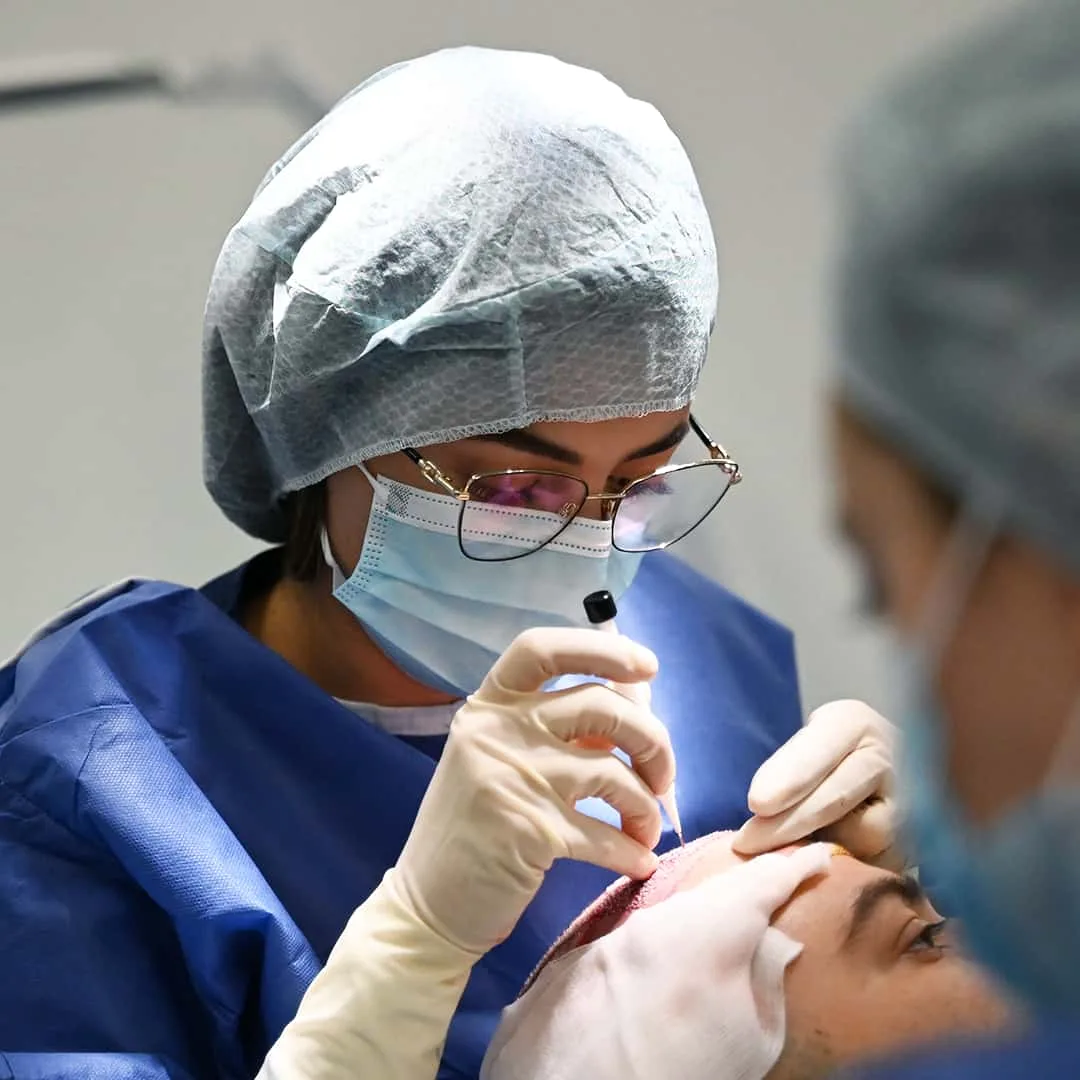
A thin hair transplant addresses diffuse thinning across the scalp where some native hair remains. The DHI Choi pen technique places new grafts between existing strands without damaging or shock-shedding the surrounding hair, building visible density without aggressive shaving.
| Alopecia Classification | Clinical Presentation | Surgical Viability |
| Male Pattern Baldness | Localized recession at hairline or crown | High density packing in bald zones |
| Diffuse Patterned Alopecia | General thinning with a stable donor area | Targeted implantation between native hairs |
| Diffuse Unpatterned Alopecia | Thinning across the entire scalp including the donor area | Surgery not advised; requires medical therapy |
| Female Pattern Hair Loss | Widening of the central parting | Unshaven density reinforcement |

Diffuse thinning produces uneven density across the entire scalp rather than a clear bald patch, which makes the transplant strategy fundamentally different. The challenge is to add new follicles between existing hair without damaging what is already growing. Hairtec uses single-graft DHI implantation with a Choi pen so each new follicle is placed at a precise depth and angle within the existing matrix.
Pre-operative density analysis maps the lowest-coverage zones first. Grafts are then concentrated in those areas to lift the overall visual density to a uniform level. The remaining native hair is preserved completely, which is critical for patients who still have meaningful coverage to protect.
Women rarely experience complete baldness. Female hair loss typically presents as a diffuse reduction in overall volume across the mid scalp, often measured clinically by the Ludwig scale. A female hair transplant for thin hair is specifically tailored to address this pattern of loss without requiring the patient to alter their daily aesthetic or endure a dramatic physical transformation.
Many female patients delay seeking clinical treatment due to the misconception that full head shaving is a mandatory requirement for surgery. Modern clinical advancements now allow for targeted density increases without a full shave. This preserves the patient privacy and eliminates the severe social downtime associated with traditional hair restoration.
For women in professional or corporate environments, shaving the head is generally unacceptable. Because a female hair transplant for thin hair focuses on increasing density rather than rebuilding a completely bald hairline, it is highly compatible with Unshaven FUE protocols.
The clinical team shaves only a small, horizontal hidden window at the lower back of the head to extract the donor follicles. The long hair resting above this extraction window falls over it naturally, completely concealing the surgical site once the patient stands up.
The recipient area on the top of the scalp is not shaved at all. The surgeon parts the existing long hair and implants the new follicles directly into the thinning zones.
Executing a density focused transplant requires a highly disciplined clinical environment. Hairtec operates under the stringent medical regulations of the Dutch healthcare system in Delft, Netherlands. This framework prioritizes patient safety, strict facility sterilization, and data driven aesthetic results.
Operating between existing hairs naturally slows down the surgical pace. Because the procedure takes longer than a standard baldness treatment, keeping the extracted grafts alive is a primary clinical concern. Hairtec utilizes advanced cooling solutions and specialized nutrient baths to keep the extracted grafts in an optimal metabolic state while they await implantation.
The clinical pathway begins long before the surgery date. Hairtec utilizes secure digital consultations to evaluate the patient donor capacity remotely. The medical team analyzes clear photographs to calculate the exact density requirement and verify that the patient possesses enough stable donor hair to achieve a satisfactory visual result.
This structured pre operative assessment prevents patients from traveling unnecessarily if they are not suitable candidates for the procedure, a common issue in unregulated commercial clinics.
Hairtec caters specifically to an international demographic that demands high clinical standards and absolute discretion. For patients traveling from London and other UK cities to the Netherlands, the clinic provides a fully managed logistical pathway.
Upon arrival in the Netherlands, patients are supported with VIP airport transfers and premium accommodation. This closed loop system allows the patient to undergo the highly complex unshaven procedure, receive their immediate medical aftercare and PRP treatment, and return to the UK in a highly controlled and stress free environment.
The recovery timeline for a thin hair transplant requires patience. Because the surgery is performed among existing hairs, patients must follow a specific washing routine.
During the first three days, patients use a saline spray to keep the grafts hydrated without touching them. The microscopic crusts that form around the newly implanted grafts will begin to fall off naturally between days seven and ten. By the end of the second week, the surgical intervention is virtually undetectable.
The newly implanted hair will shed between weeks two and four. Permanent new hair growth begins around the third month. The hair will initially be fine but will thicken and mature over the next several quarters, reaching its final aesthetic density at the twelve month mark.
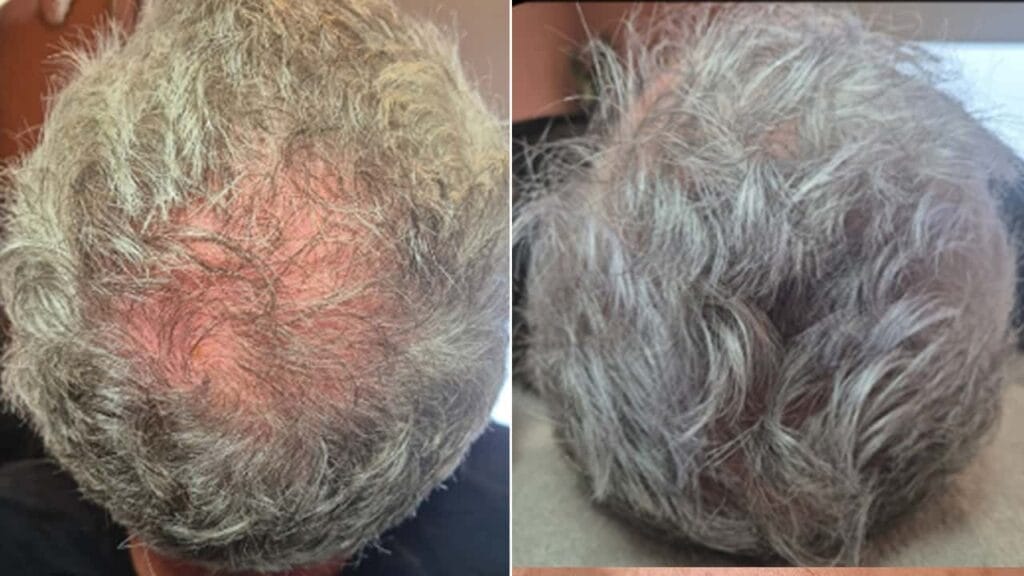
Women rarely experience complete baldness. Female hair loss typically presents as a diffuse reduction in overall volume across the mid scalp, often measured clinically by the Ludwig scale. A female hair transplant for thin hair is specifically tailored to address this pattern of loss without requiring the patient to alter their daily aesthetic or endure a dramatic physical transformation.
Many female patients delay seeking clinical treatment due to the misconception that full head shaving is a mandatory requirement for surgery. Modern clinical advancements now allow for targeted density increases without a full shave. This preserves the patient privacy and eliminates the severe social downtime associated with traditional hair restoration.
For women in professional or corporate environments, shaving the head is generally unacceptable. Because a female hair transplant for thin hair focuses on increasing density rather than rebuilding a completely bald hairline, it is highly compatible with Unshaven FUE protocols.
The clinical team shaves only a small, horizontal hidden window at the lower back of the head to extract the donor follicles. The long hair resting above this extraction window falls over it naturally, completely concealing the surgical site once the patient stands up.
The recipient area on the top of the scalp is not shaved at all. The surgeon parts the existing long hair and implants the new follicles directly into the thinning zones.

Choosing the correct surgical tool is critical when operating on a scalp with existing hair. The best hair transplant for thinning hair utilizes methods that offer absolute control over the placement angle and depth. Traditional slit techniques, which use steel blades to open large channels before implantation, carry a high risk of damaging the native roots.
The extraction phase also requires high precision. The medical team utilizes micro motor punches ranging from 0.7mm to 0.8mm to extract the follicles. These ultra small punches verify that the donor area heals rapidly without leaving visible white dot scarring, preserving the density at the back of the head.
For adding density between native hairs, Direct Hair Implantation is universally considered the superior clinical option. The surgeon uses a specialized Choi Implanter Pen to execute the extraction and implantation simultaneously. The follicle is loaded into the hollow needle of the pen and injected directly into the scalp.
This method eliminates the need to pre open channels. The sharp tip of the implanter pen bypasses the native hair shafts easily, allowing the surgeon to slide the new graft safely into the microscopic empty spaces.
When dealing with thinning hair, the native follicles are already structurally weak. A surgical intervention places additional biological stress on the scalp. To counteract this, Platelet Rich Plasma therapy is heavily integrated into the surgical protocol for density building procedures.
PRP utilizes growth factors isolated from the patient own blood. A small sample is drawn prior to the surgery and spun in a medical centrifuge to separate the plasma from the red blood cells. When this highly concentrated plasma is injected into the scalp during the transplant, it acts as a biological shield. It accelerates tissue repair, drastically reduces the likelihood of shock loss, and forces the weak native hairs back into the active growth phase.
Medical teams can successfully implant new follicles between existing hairs to increase overall density. The procedure requires specialized micro tools like the DHI implanter pen to avoid damaging the active native roots. A thorough diagnostic phase is required to confirm donor area stability before proceeding.
It is a highly common and effective procedure for female pattern hair loss. Medical teams utilize advanced unshaven techniques to add volume to the mid scalp and parting without altering the patient current hairstyle or shaving the top of the head.
The Direct Hair Implantation method is the most effective technique for thinning hair. It allows the surgeon to place grafts precisely between native hairs without the need to open large channels with steel blades. This approach protects the existing hair structure from surgical trauma.
If performed incorrectly by inexperienced technicians, surgical tools can cut the roots of your existing hair. Highly trained surgeons use optical magnification and DHI pens to bypass the native roots. This clinical precision eliminates the risk of permanent surgical transection.
You can undergo the procedure provided your donor area at the back of the head is genetically stable and healthy. If you suffer from diffuse unpatterned alopecia where the donor area is also actively thinning, surgery is not recommended and medical therapy is advised.
Because the surgeon must work carefully and slowly between existing hairs, the procedure takes more time than working on a completely bald scalp. A typical density building session lasts between six and eight hours to maintain high graft survival rates.
Shock loss is a temporary condition where native hairs fall out due to the physical trauma of the surgery. The hair typically regrows after a few months once the scalp heals. Medical teams use PRP therapy during the procedure to minimize the severity of this temporary shedding.
Because the primary goal is to increase density, this procedure is highly compatible with unshaven protocols. Only a small donor window at the lower back of the head is shaved. Your remaining long hair easily covers this extraction site immediately after the surgery.
The exact number varies greatly depending on the size of the thinning area and the desired density. Sessions typically range from 1500 to 3000 grafts. A clinical consultation and digital mapping process are required to calculate the exact mathematical requirement for your scalp.
The transplanted hair is permanent and resistant to DHT, but your native hair may continue to thin over time due to your underlying genetics. Medical clinics recommend ongoing stabilization protocols and biological therapies to maintain the health of your native hair long term.