Hairtec Hair Transplant Clinic

Reaching the thirty-day mark triggers a wave of unexpected anxiety for many patients. At exactly 1 month after hair transplant surgery, the scalp enters the shedding phase known as shock loss. This is often the most psychologically challenging part of the recovery. The Hairtec clinical protocol emphasizes that this shedding is not a sign of surgical failure but a strictly necessary biological step toward permanent hair growth. The grafts are now fully secure, and the focus shifts entirely to long-term scalp health and continuous medical monitoring.
| Daily Activity | Clinical Rule for 1 Month | The Medical Justification |
| Heavy Weightlifting | Perfectly Safe | The vascular system is fully healed and handles high blood pressure easily. |
| Swimming in Pools | Perfectly Safe | Microscopic channels are fully closed, eliminating chlorine infection risks. |
| Using Hair Concealers | Strictly Prohibited | Cosmetic hair powders and fibers clog the healing pores and stop new growth. |
| Heavy Contact Sports | Caution Required | Blunt trauma from boxing or rugby causes deep internal scarring and stops growth. |
| Direct Sun Exposure | Caution Required | Patients must wear a hat or apply a high-quality SPF 50 scalp sunscreen to prevent hyperpigmentation. |
A common side effect exactly 1 month after hair transplant procedures is the appearance of small, red bumps or whiteheads. This condition is known as folliculitis. It happens when the skin heals over the extraction or implantation channels, occasionally trapping natural oils.
Patients must never pop or squeeze these bumps. Squeezing introduces bacteria into the deep tissue and risks damaging the resting follicle beneath the skin. Applying a clean, warm compress to the area for five minutes helps open the pores naturally.
This is where the Hairtec aftercare system proves its value. Patients do not navigate this phase alone. If bumps multiply rapidly or the shedding causes extreme panic, the patient’s dedicated medical assistant remains on call. Sending a quick photo through the secure digital portal allows the medical team to evaluate the healing progress instantly and provide tailored clinical advice.


For female patients dealing with diffuse thinning, the shock loss phase can feel particularly discouraging. The long native hairs may shed alongside the newly implanted grafts, and the urge to style the hair to hide these patches is strong.
Heat styling requires extreme caution. Using a hairdryer on a strictly cool setting is safe. However, hot tools like curling irons or flat irons must never touch the roots or the recipient scalp, as the intense heat will severely burn the recovering tissue. Applying clip-in hair extensions is also strictly forbidden. The clips place heavy traction and physical weight directly on the neighboring hairs, which easily pulls out the resting follicles.
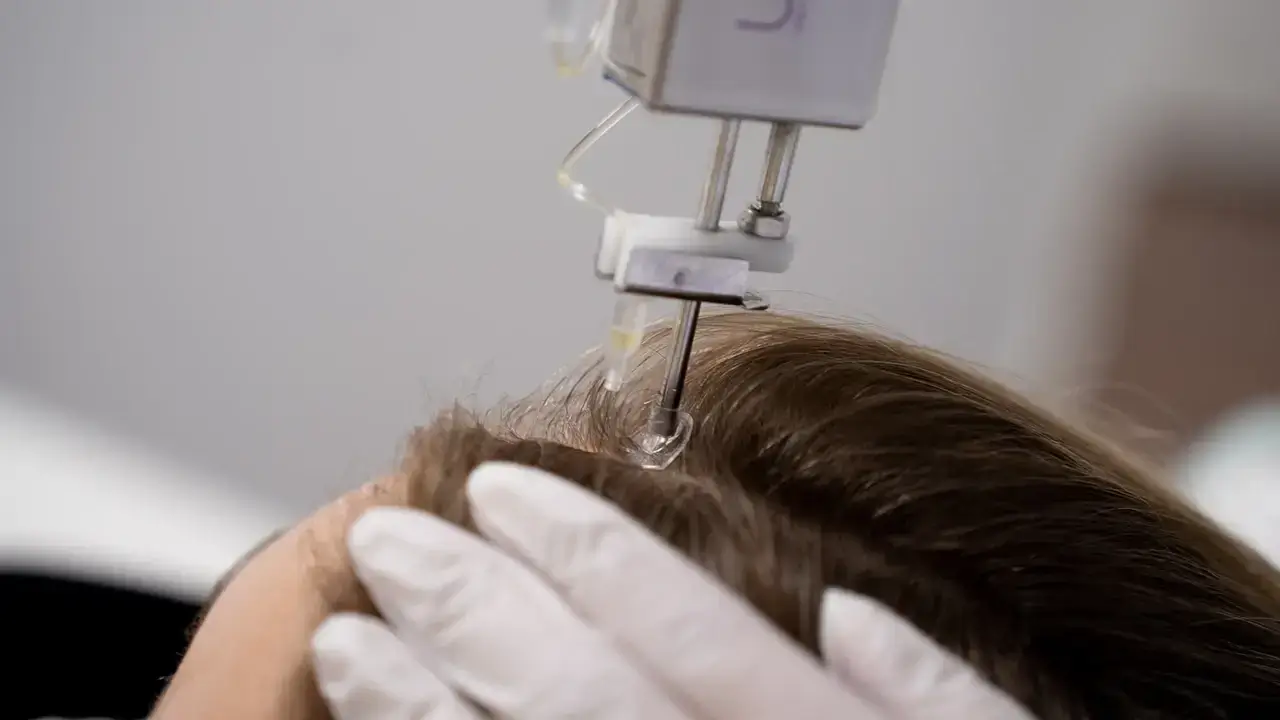
To combat this challenging phase, many patients utilize Platelet-Rich Plasma (PRP) therapy exactly one month post-surgery. The concentrated growth factors in PRP help the resting follicles wake up faster and significantly strengthen the existing native hairs. This clinical treatment reduces the overall duration of the shock loss period and accelerates the transition into the visible growth phase.
This is the biological shock loss phase. The trauma of the surgery causes the newly implanted hair shafts to detach and fall out. The vital follicle root remains entirely safe and securely anchored beneath the skin, preparing for a new, permanent growth cycle.
No. Cosmetic hair building fibers and colored concealers are strictly prohibited during the first few months. These micro-powders heavily clog the healing pores, preventing the scalp from breathing and potentially suffocating the new follicles before they emerge.
Applying any form of hair extensions, including clip-ins or tape-ins, is highly dangerous at the one-month mark. Extensions add severe tension and physical weight to the native hair, which causes traction alopecia and pulls out the vulnerable resting grafts nearby.
Patients can safely use a hairdryer only if it is set to the coolest temperature. Hot styling tools like curling irons and straighteners must be kept far away from the scalp. The intense heat easily burns the sensitive healing skin and damages the follicles beneath.
This is known as donor area shock loss. The physical trauma of extracting thousands of grafts sometimes causes the surrounding native hairs at the back of the head to shed temporarily. These patches will fill in completely as the hair cycles reset.
Heavy contact sports still require extreme caution. Although the follicles are anchored, a severe blunt force impact to the head causes deep tissue scarring. This internal scarring permanently damages the roots and stops future growth.
Yes. If wearing a hat is not possible outdoors, patients can safely apply a liquid SPF 50 sunscreen directly to the scalp. Protecting the pink, healing skin from UV rays is critical to prevent permanent dark spots and hyperpigmentation.
The Hairtec recovery protocol includes continuous remote monitoring. Patients submit monthly photos through a secure digital portal, allowing their dedicated medical assistant to track the shedding phase, evaluate scalp health, and provide immediate guidance if any folliculitis occurs.
PRP injections deliver a high concentration of natural growth factors directly to the resting follicles. This clinical boost helps the roots recover from surgical trauma faster, potentially shortening the shedding phase and improving future hair density.
Every step toward a fuller head of hair starts with good advice. Schedule a free, no-obligation consultation and find out which treatment is right for you.
A personal consultation with our specialists to discuss your needs and options.
A detailed analysis of your scalp and hair follicles to determine the right approach.
The chosen hair transplant technique is carefully performed by our experienced team.
Professional support after your treatment to ensure optimal recovery and lasting results.