Hairtec Hair Transplant Clinic

The loss of hair at the temples is typically the first sign of genetic thinning. This specific recession directly alters the framing of the face and disrupts its natural symmetry. A temple hair transplant is a targeted surgical procedure that relocates healthy, permanent follicles to rebuild this vital facial boundary.
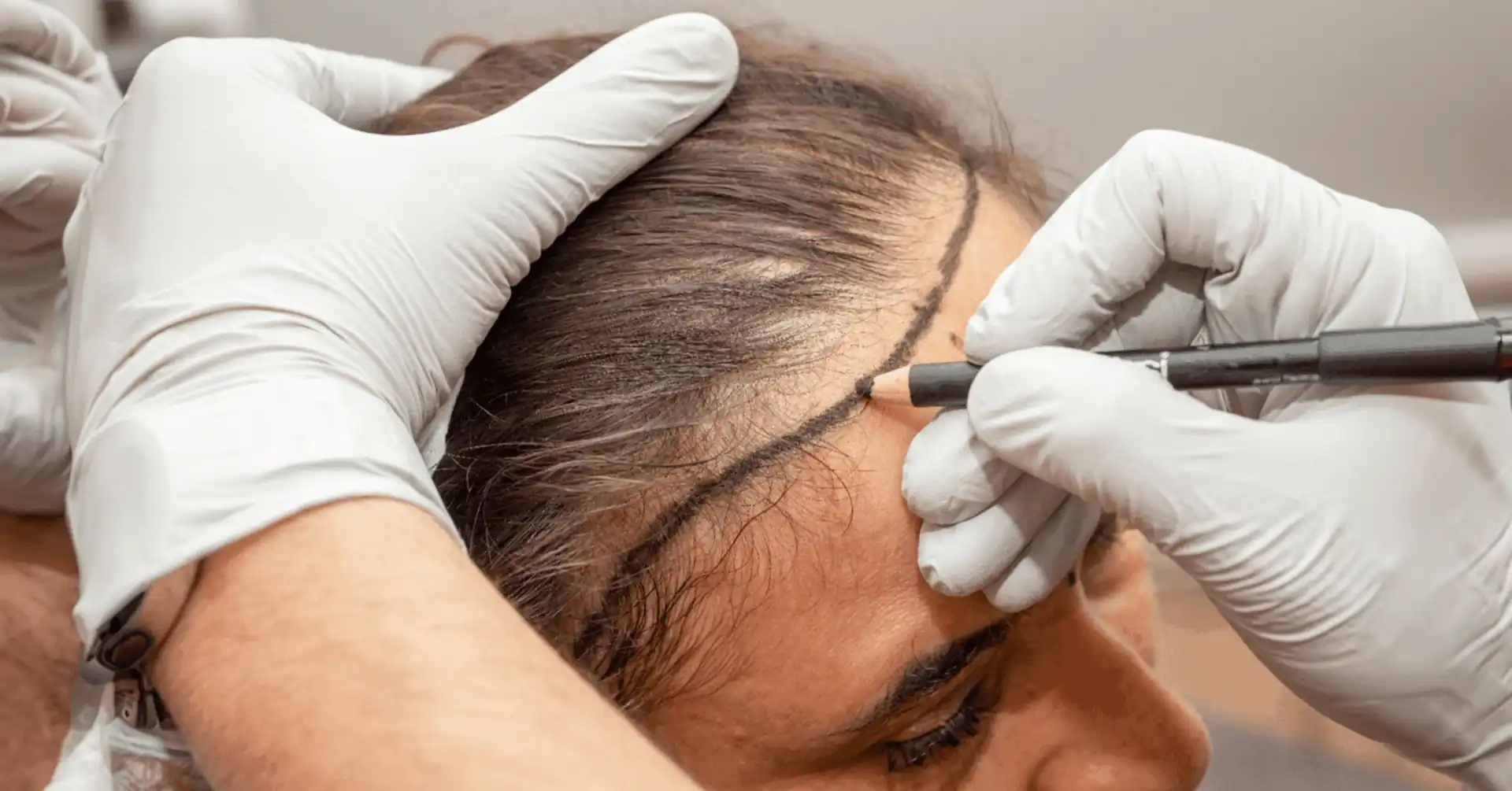
A temple hair transplant reconstructs the receding corner zones above the eyebrows where male pattern hair loss commonly begins. The procedure uses single-graft DHI placement to recreate the soft irregular pattern of natural temple hair, restoring frame symmetry to the face.
Restoring the temporal region requires strict technical discipline. Hair in this zone grows at a remarkably flat angle, sweeping downward and backward toward the ears. Replicating this exact biological geometry is the primary clinical focus. Without precise angle control during implantation, the final result looks artificial and cannot be styled naturally.
Many individuals noticing deep triangular recession on the sides of their forehead ask can a hair transplant restore receded temples effectively. The clinical answer is a definitive yes. Modern surgical techniques allow for the complete reconstruction of the temporal peaks and the surrounding frontal boundary. Success in this highly visible area depends entirely on the availability of high quality donor hair and the technical discipline of the medical team.
The hair follicles located at the temples have a high concentration of androgen receptors, making them highly sensitive to dihydrotestosterone. Over time, this sensitivity causes the follicles to miniaturize. The hair shaft becomes progressively thinner and shorter until the follicle ceases production entirely.
Because this is a permanent biological process, topical cosmetic products cannot reverse deep recession. Once the skin at the temples is completely smooth, surgical relocation of DHT resistant follicles from the back of the head is the only permanent medical solution.
The temporal points are the small triangles of hair that point forward toward the outer edge of the eyebrows. Rebuilding these points is a specialized architectural task. If the temporal peaks are placed too far forward, the face looks unnaturally boxed in. The surgeon uses forensic mapping to calculate the exact degree of the angle required to match the patient original, youthful hairline.
To achieve a natural look, the medical team often harvests donor hair from the very lower part of the neck. The hair in this lower region is much softer and finer in caliber than the thick hair in the middle of the donor area. Only these fine, single hair follicles are used to construct the very front edge of the temporal peak. Using multi hair grafts or thick hairs in this zone immediately signals that a surgical intervention has taken place.

Temple recession is one of the earliest and most visible signs of male pattern hair loss. The temporal angle defines facial framing, and even a small recession shifts the entire upper-face proportion. A temples hair transplant restores the natural temporal peak using single-graft DHI placement, where each follicle is angled to match the existing direction of growth at the temple region: sharper at the corners, softer along the upper edge.
The design phase is critical. The temple line must respect age-appropriate density, the curvature of the existing hairline, and the intended overall facial framing. Hairtec maps each side independently to ensure perfect symmetry between left and right temples.
Calculating the exact number of follicles is a critical part of the surgical planning phase. Every facial structure is different, and the required density depends on the degree of recession and the thickness of the existing native hair. A standard temple restoration typically requires between 300 and 800 grafts per side.
| Degree of Recession | Graft Requirement (Approx.) | Clinical Objective | Follicle Type Required |
|---|---|---|---|
| Mild Temple Thinning | 300 to 500 Grafts | Reinforcing existing density | Fine single hairs |
| Moderate Triangular Recession | 500 to 800 Grafts | Rebuilding the temporal peaks | Mixed single and double hairs |
| Deep Recession | 800 to 1200 Grafts | Full reconstruction of the frame | Singles for the edge, multiples for volume |
| Corrective Procedures | Variable Volume | Camouflaging previous surgical marks | Targeted single implantations |
The medical team evaluates the patient bone structure before drawing the surgical blueprint. A receded temple widens the appearance of the forehead and disrupts the proportions used in facial aesthetics. By bringing the temporal peaks forward, the clinical team reestablishes a balanced frame for the eyes and the upper face. The surgeon calculates the exact geometric angle required to match the native hair trajectory.
The skin at the temples is uniquely thin compared to the mid scalp. The entry points for a hair transplant on temples must be incredibly shallow. The natural hair here lies almost completely flat against the skin. The surgeon creates microscopic incisions that force the new follicle to grow in this flat trajectory.
For the temple region, the clinical team selects the implantation tool based on the required density and skin type. Extraction is always performed using the Follicular Unit Extraction method to prevent linear scarring at the donor site.
Direct Hair Implantation is frequently the preferred clinical method for a temple hair transplant. The surgeon uses a specialized Choi Implanter Pen to place the follicle directly into the scalp. This medical tool provides absolute control over the depth, angle, and direction of the hair.
Because the temples require incredibly flat angles, the implanter pen allows for a level of micro accuracy that traditional slit techniques often struggle to match. The medical team utilizes ultra fine pen tips to handle the delicate single hairs required for the frontal boundary.
For many professionals and female patients, shaving the entire head to restore the temples is not an option. Because the total number of grafts required for the temples is relatively low, this specific procedure is highly compatible with Unshaven FUE protocols.
The clinical team shaves only a small horizontal window at the back of the head. This donor window is immediately concealed by the surrounding long hair once the patient stands up. The recipient area at the temples is not shaved at all. The surgeon carefully implants the new follicles between any existing native hairs, preserving the patient current aesthetic appearance completely.

The recovery process for a temple restoration is rapid due to the limited size of the surgical area. However, because the temples are highly visible and located near the eyes, specific post operative care is required to verify a smooth healing process.
Financial planning is a core part of the medical process. Patients actively researching the hair transplant for temples cost notice significant pricing variations across different clinics. The final financial investment reflects the clinical technology and the medical expertise required to execute the surgery safely.
The cost is influenced by several clinical variables. Higher volumes of deep recession require more follicles and a longer time in the operating theater. The use of advanced DHI pens carries a higher operational cost than traditional steel instruments. Furthermore, executing an Unshaven FUE procedure requires significantly more time and specialized surgical skill from the medical team.
Many individuals in the UK choose to bypass the premium pricing models often found in central London by traveling to specialized clinics in Europe that offer comprehensive medical packages.

Executing a flawless temple reconstruction requires a highly disciplined clinical environment. Hairtec operates under the stringent medical regulations of the Dutch healthcare system in Delft, Netherlands. This framework prioritizes patient safety, facility sterilization, and data driven aesthetic results.
Because the total number of grafts for a temple session is limited, the medical team cannot afford to lose a single follicle. Hairtec utilizes advanced cooling solutions to keep the extracted grafts in an optimal metabolic state.
To maximize the biological success of the surgery, Hairtec integrates Platelet Rich Plasma therapy into the surgical protocol. Applied during the procedure, PRP provides immediate nutrients to the newly implanted temporal follicles before the body establishes a permanent vascular connection. This accelerates tissue repair and significantly reduces visual redness in the temple area.
Hairtec caters specifically to an international demographic that demands high clinical standards and absolute discretion. For patients traveling from London and other UK cities to the Netherlands, the clinic provides a fully managed logistical pathway.
The process begins with a secure digital consultation to map the temporal recession and calculate the exact graft requirement. Upon arrival in the Netherlands, patients are supported with VIP airport transfers and premium accommodation. This closed loop system allows the patient to undergo the unshaven procedure, receive their immediate aftercare, and return to the UK in a controlled and stress free environment.
Yes. When performed by a highly skilled medical team using soft single hair follicles harvested from the nape, and implanted at a flat 10 to 15 degree angle, the results are completely indistinguishable from native hair.
The exact price depends on the number of grafts required. Because the temples usually require a smaller volume than a full crown reconstruction, the cost is generally lower than a standard full head session. A clinical consultation is required for a precise quote.
Yes. It is a very common procedure for women who have naturally high temporal peaks or who have experienced hair loss due to traction alopecia from tight hairstyles. The unshaven method is particularly popular for female patients.
Most patients require between 300 and 800 grafts per side. Deep recession linking up to the mid scalp may require over 1000 grafts in total.
Yes. Because the graft count is relatively low, this specific procedure is highly suitable for Unshaven FUE protocols. You can maintain your current hairstyle during the recovery phase.
The skin is thinner than the top of the scalp, which is why specialized micro tools and DHI pens are used. Experienced surgeons manage the exact depth of the incisions to protect the underlying vascular structure.
No. The entry points created by the DHI pen are microscopic. They heal as tiny dots that become completely invisible once the surrounding hair begins to grow.
The surgery is performed under advanced local anaesthesia. You will feel no pain during the extraction or the implantation phases. Mild tenderness during the first 48 hours is managed with standard clinical medication.
You must be very careful not to let the arms of the glasses rub against the newly implanted grafts. Most clinics advise taping the glasses slightly higher on the head or avoiding them entirely for the first seven days.
If you opt for the unshaven method and work in a remote environment, you can return to work within 48 hours. If you work in a public facing role, you may prefer to take five to seven days off until the minor crusting resolves.