Hairtec Hair Transplant Clinic

A failed or poorly executed hair restoration procedure often results in significant psychological distress and a highly unnatural appearance. A hair transplant repair is a specialized clinical intervention designed to correct aesthetic errors such as pluggy hairlines, incorrect hair angles, and visible scarring. The primary medical objective is to restore a natural facial frame while utilizing the remaining donor hair as efficiently as possible.
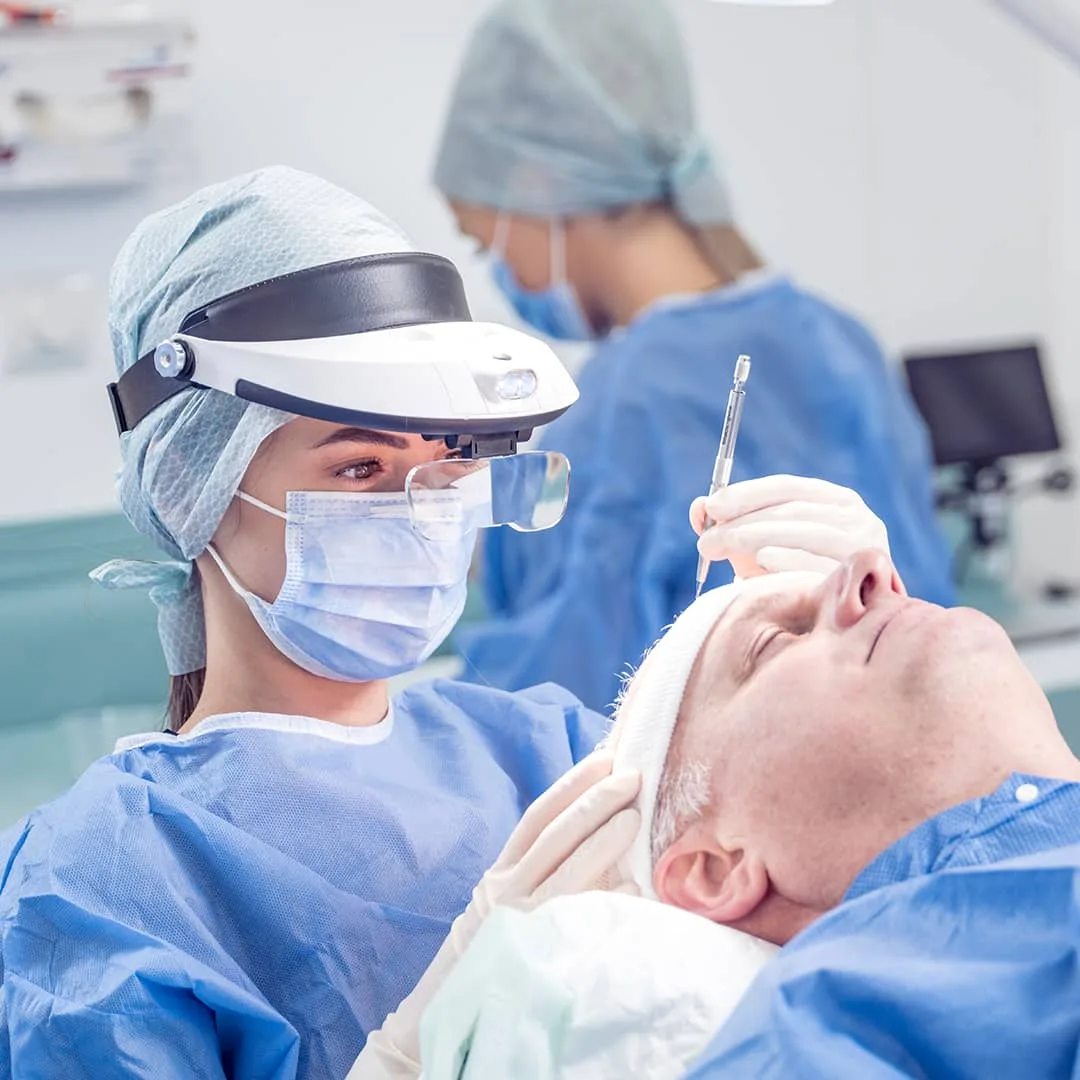
A hair transplant repair procedure corrects botched, low-quality or unnatural results from previous transplants performed at other clinics. The treatment combines selective graft extraction, redirection and dense DHI placement to restore natural angles, density and a believable hairline outcome.
Corrective surgery is significantly more complex than a primary hair transplant due to the presence of scar tissue and depleted donor supplies. The Hairtec medical team must evaluate the scalp to determine if the previous grafts can be extracted and relocated or if they must be camouflaged using new follicles. Achieving a successful repair requires a high degree of surgical skill and a deep understanding of natural hair growth patterns.
Many individuals who have undergone a sub-standard procedure in unregulated clinics ask can a bad hair transplant be fixed effectively. The clinical answer is usually yes, but the approach depends on the specific nature of the failure. A bad hair transplant repair often involves a multi-stage process where the surgeon first corrects the structural errors of the previous surgery before building new density.
The medical team must first identify the primary cause of the aesthetic failure. Common issues include a hairline that is too low, hair follicles placed in a straight row like “doll’s hair,” or grafts implanted at a 90 degree angle. By utilizing advanced magnification and micro tools, surgeons can systematically address these errors to create a softer and more believable appearance.
An unnatural hairline is the most visible sign of a failed procedure. In many bad hair transplants, the grafts are too thick and placed too far forward. The Hairtec medical team utilizes a “punch out” technique to remove these large, multi-hair grafts. Once removed, the area is allowed to heal, and the extracted follicles are often dissected into smaller single units and re-implanted at the correct angle.
Proper angulation is critical for a natural look. Hair in the frontal hairline should point forward and lie relatively flat against the scalp. If a previous clinic implanted grafts pointing straight up or sideways, the repair surgeon must create new channels that force the hair into a natural trajectory.
Poor density often results from low graft survival rates or over-harvesting the donor area. When a patient presents with patchy growth, the medical team must first determine if the scalp tissue can support new grafts. If the previous surgery caused extensive scarring in the recipient area, blood flow may be compromised.
| Common Failure Symptom | Underlying Cause | Clinical Repair Solution |
|---|---|---|
| Pluggy Appearance | Large multi-hair grafts in the front | Removal and redistribution of single units |
| Incorrect Direction | Poor channel opening technique | Creating new channels with DHI pens |
| Visible Linear Scar | Outdated FUT strip method | FUE hair transplant for scar repair |
| Depleted Donor Area | Over-harvesting or poor extraction | Using beard or body hair if necessary |
| Low Survival Rate | Poor graft handling or dehydration | High-precision DHI with cooling solutions |

A hair transplant repair addresses unnatural-looking results from previous procedures: pluggy hairlines, incorrect graft direction, visible scarring, or low-density patches that fail to blend with native hair. The most common causes are oversized grafts placed at the wrong angle and surgeons relying on outdated FUT or punch-graft methods. Hairtec uses single-graft DHI implantation to revise these outcomes with millimetre-level control.
The correction strategy depends on what is wrong. Sometimes existing grafts need to be extracted and re-implanted at the correct angle. In other cases, the priority is filling the surrounding area to soften the appearance of incorrectly placed plugs. Each plan is built around the donor reserve to make sure the patient has enough capacity for both the repair and any future maintenance.
Treating a failed hair transplant repair requires a combination of extraction, relocation, and camouflage. The surgeon acts as an architect, working with a limited supply of healthy follicles to hide previous mistakes.
When "plugs" (large clusters of hair) are removed, the surgeon uses microscopic punches to extract the entire follicular unit. This process not only removes the unnatural look but also provides the surgeon with "recycled" donor hair that can be used elsewhere on the scalp. This is particularly important for patients who have very little donor hair left after a failed first surgery.
In many cases, a failed procedure leaves behind small, pitted scars or "cobblestone" skin texture in the recipient area. A hair transplant for scar repair involves placing new, healthy follicles directly into these scarred zones. This camouflage technique breaks up the visual texture of the scar and provides a more uniform skin appearance.
Many patients seek a repair because of a large, visible scar at the back of the head resulting from an old FUT (strip) procedure. This type of scarring prevents patients from wearing short hairstyles and serves as a constant reminder of a failed surgery.
A hair transplant scar repair for linear marks involves extracting individual follicles using the FUE method and implanting them directly into the scar tissue. Because scar tissue has limited blood supply, the medical team must use a specific density protocol to ensure the grafts survive. By filling the scar with hair, the white line becomes virtually invisible even with shorter haircuts.
Because scar tissue is fibrotic and has poor vascularity, the Hairtec team often integrates Platelet Rich Plasma therapy into the repair protocol. PRP provides a concentrated dose of growth factors that stimulate new blood vessel formation in the scarred area. This biological support is essential for increasing the survival rate of follicles implanted into a failed hair transplant scar.

The financial investment for corrective surgery is generally higher than a standard primary transplant. The hair transplant scar repair cost reflects the increased surgical time, the use of microscopic extraction tools, and the complexity of working with damaged skin.
When researching hair transplant scar repair uk options, patients often find that fees are calculated based on the complexity of the revision rather than a simple graft count. A repair session that involves removing old grafts and re-implanting new ones takes significantly longer than a standard session.
One of the most frequent questions from patients is how long hair transplant takes to repair from start to finish. The timeline for a repair is longer than a standard procedure because the scalp often needs time to recover from the previous trauma before a new intervention can begin.
The repair process usually starts at least six to twelve months after the failed surgery. This ensures that the scalp has fully healed and the final results of the first procedure are visible.

Executing a successful repair requires a disciplined clinical environment that prioritizes medical outcomes over commercial volume. Hairtec operates under the strict medical regulations of the Netherlands, offering a data-driven approach to corrective surgery in Delft.
The medical team at Hairtec specializes in the "repair and restore" philosophy. This involves a comprehensive evaluation of the donor area to ensure that no further depletion occurs. By utilizing the DHI (Direct Hair Implantation) method, the Hairtec team can place new follicles between existing ones with microscopic precision, which is vital for patients who have already suffered from a bad hair transplant repair elsewhere.
For patients traveling from the UK, Hairtec provides a managed logistical pathway. This includes VIP airport transfers and premium accommodation, allowing the patient to undergo their corrective surgery in a stress free environment. The focus is on providing a permanent, natural-looking solution that finally corrects the errors of the past.
Yes. A bad hair transplant can be fixed by removing poorly placed grafts and re-implanting them at the correct angle and density. The results of a repair session are permanent as long as the donor hair used is healthy and DHT resistant.
The cost varies based on the size of the scar and the complexity of the tissue. Corrective work is often more expensive than primary sessions because of the specialized skill and time required. Hairtec offers structured pricing for international patients traveling for repair work.
While the initial healing takes about ten days, the final aesthetic results take between twelve and eighteen months. This allows the newly implanted hair to mature and the skin texture to normalize after the corrective procedure.
Most patients are eligible for a second procedure if they still have enough donor hair at the back of the head or on the beard. The medical team will conduct a thorough donor assessment to ensure the area has not been over-harvested.
A skilled medical team uses ultra-fine punches to ensure that the remaining donor hair is preserved. The goal of a repair is to be as conservative as possible with the donor supply while maximizing the visual impact in the recipient area.
DHI is often the preferred method for repair work because it allows for absolute control over the angle and depth of the hair. This is essential when trying to match new grafts with the existing hair growth patterns on a damaged scalp.
The surgeon uses a punch-out technique to remove the large clusters of hair. These grafts are then dissected under a microscope into single follicles and re-implanted to create a soft, natural hairline.
Yes. Grafts that were placed too low on the forehead or at unnatural angles can be extracted. Once removed, the skin heals, and the hair can be moved to a more appropriate location on the scalp.
The success rate is high when performed by a specialist medical team. However, because scar tissue has less blood flow than healthy skin, the graft survival rate may be slightly lower than in a primary transplant. PRP therapy is used to improve these outcomes.
Hairtec provides secure digital consultations where patients can upload high-resolution photos of their failed transplant and donor area. This allows the medical team to provide an initial assessment and repair plan before the patient travels to the Netherlands.