Hairtec Hair Transplant Clinic

The global hair restoration industry has expanded rapidly over the last decade, transitioning from a niche cosmetic field into a highly standardized, multi billion dollar medical sector. Clinical data and surgical census reports compiled by international medical boards indicate a massive shift in how the general population approaches hair loss. Surgical intervention is no longer considered a rare procedure, but a mainstream, clinically predictable solution for androgenetic alopecia.

Tracking hair transplant statistics provides a transparent picture of shifting patient demographics, the adoption of new medical technologies, and the rising standards of clinical care. By analyzing annual procedure volumes, average patient ages, and precise graft survival rates, medical professionals can map the true trajectory of the hair restoration sector. This hard data confirms a steady, year on year compounding growth rate fueled by better surgical outcomes and global medical accessibility.
The volume of surgical hair restoration procedures performed globally reflects a massive, highly active medical market. Major societies, such as the International Society of Hair Restoration Surgery, track these numbers rigorously to monitor clinical safety and overall industry expansion.
Recent census data highlights a sustained, uninterrupted upward trend in surgical bookings. Hundreds of thousands of patients elect to undergo surgical restoration every single year. This massive volume is driven heavily by the social normalization of cosmetic surgery for men and the rapid development of less invasive, micro surgical extraction techniques.
Geographical data shows that surgical volume is not distributed evenly. Certain global regions perform a significantly higher percentage of the surgeries due to a high concentration of specialized clinics, favorable local economic conditions, and government backed medical tourism initiatives.
The Middle East and Europe region currently completely dominates the global statistics. North America and Asia also represent massive markets, though they are driven almost entirely by domestic patient demand rather than cross border travel.
| Global Region | Estimated Share of Procedures | Primary Market Driver |
|---|---|---|
| Middle East and Europe | 40 to 45 Percent | International medical travel and specialized European clinical hubs |
| Asia | 25 to 30 Percent | Massive domestic populations and rising middle class wealth |
| North America | 15 to 20 Percent | High domestic demand and established local medical facilities |
| Latin America | 10 to 15 Percent | Regional medical tourism and localized clinical growth |
Analyzing patient demographics reveals exactly who is seeking surgical intervention for genetic hair loss. The traditional, outdated stereotype of the older male patient seeking a massive strip surgery is no longer statistically accurate.
Modern hair transplant statistics show a highly diverse patient base. The clinical data provides precise breakdowns of patient age, gender, and the stage of hair loss at the time of surgery. This illustrates a clear global shift toward younger patients taking proactive medical measures against early stage baldness.
The chronological age of patients seeking surgery spans several decades, but clinical census reports highlight a massive concentration in the middle age brackets. Patients in their thirties and forties represent the absolute majority of surgical candidates. At this age, genetic hair loss is usually well established, making surgical planning mathematically predictable.
While male pattern baldness drives the vast majority of the surgical market, the percentage of female patients is steadily rising year over year. Female pattern hair loss presents unique clinical challenges due to diffuse thinning, but advanced unshaven techniques have made surgery a highly viable option for women.
Current global statistics indicate that female patients account for approximately 12 to 15 percent of all surgical hair restoration procedures. The most common procedures for women involve lowering a naturally high, genetically prominent hairline or increasing localized density in temporal areas permanently damaged by traction alopecia.
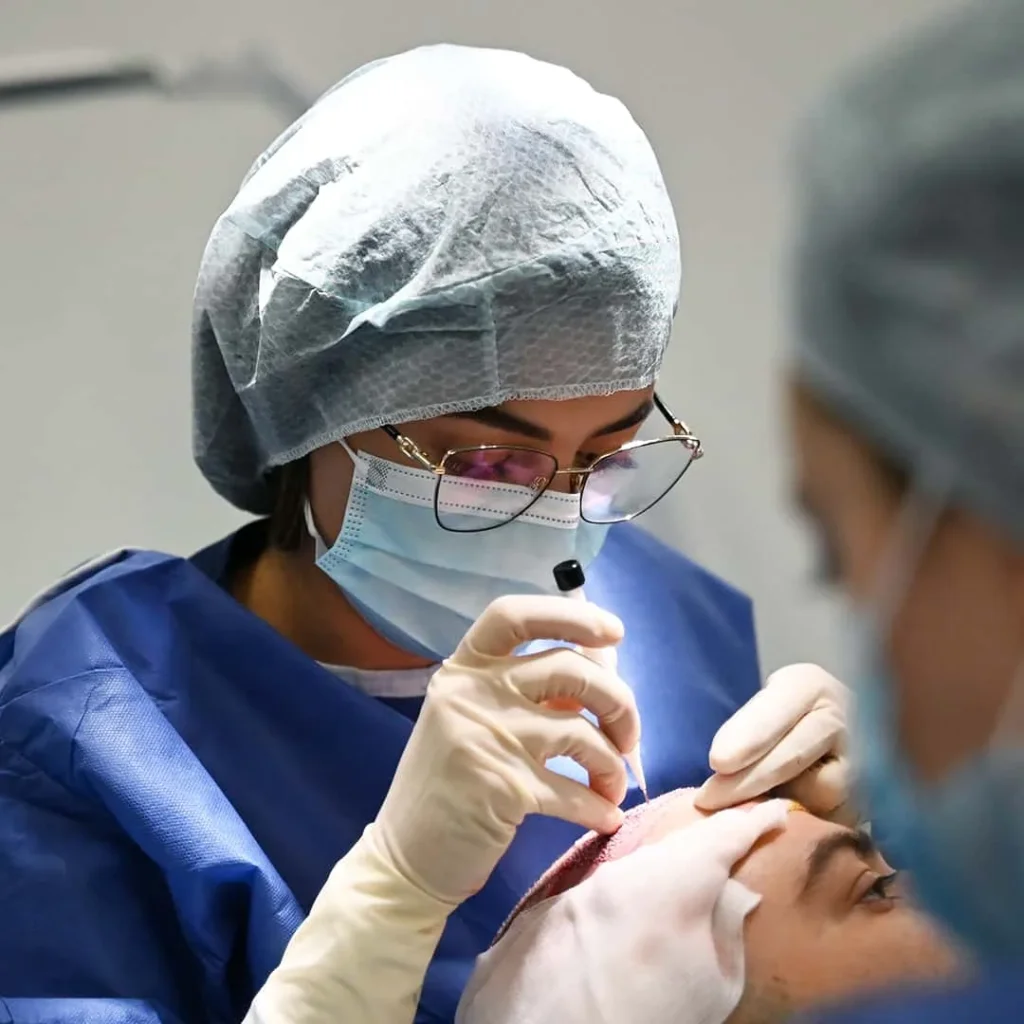
The technical approach to hair transplantation has evolved dramatically over the last twenty years. The statistics clearly show a permanent, global shift away from older, highly invasive surgical methods in favor of micro surgical techniques that leave no visible marks.
Medical boards closely track the utilization rates of different extraction and implantation protocols. The data proves that patients and surgeons overwhelmingly demand methods that minimize scalp trauma and accelerate post operative recovery times.
Follicular Unit Extraction is now the undisputed dominant surgical method worldwide. Traditional Follicular Unit Transplantation, also known as the strip method, is rapidly declining in clinical popularity. The shift toward FUE is driven entirely by patient demand for shorter recovery timelines and the ability to wear short haircuts without revealing a linear surgical scar at the back of the head.
Within the dominant FUE category, statistics show a rapid diversification in implantation technology. Direct Hair Implantation utilizing specialized implanter pens has gained massive market share, particularly in European clinics. This method eliminates the need to create pre cut incisions in the scalp, reducing bleeding and trauma. Additionally, robotic assisted FUE extraction systems account for approximately 5 percent of the high end global market, offering automated graft calculation and harvesting.
When evaluating a major medical procedure, the statistical success rate is the most critical metric for any patient. In the context of modern hair restoration, clinical success is defined by the permanent survival of the relocated follicular units and their ability to produce terminal hair shafts.
A hair transplant is widely considered one of the most successful and predictable cosmetic procedures available in modern medicine. Because the extracted follicles are genetically resistant to the hormones that cause baldness, they retain this exact biological resistance even after being moved to the top of the scalp.
Clinical studies focusing on post operative biological results provide concrete data on follicle viability. When a procedure is performed correctly by a specialized medical team in a sterile environment, the survival rates are exceptionally high. However, several environmental and physiological factors strongly influence the final statistical outcome.
A critical and rapidly growing subset of hair transplant statistics involves corrective procedures. As the global market expands, the proliferation of unregulated, black market clinics has led to a statistical surge in failed surgeries.
Medical boards report that revision surgeries now make up a significant portion of the daily workload for elite European clinics. Patients seek repairs to fix unnatural hairlines, correct severe donor area overharvesting, or camouflage heavy scarring caused by blunt extraction tools. Current census data indicates that nearly 1 in 4 patients seeking consultation at premium clinics are requesting a corrective repair for a previous, poorly executed surgery.

The financial aspect of hair restoration heavily dictates the global statistics. Because cosmetic surgery is entirely elective and rarely covered by national or private health insurance, patients are highly sensitive to procedural pricing.
This intense financial sensitivity has created a massive, highly organized international medical tourism sector. Patients routinely cross international borders to access high quality surgical care at more accessible and logical price points.
Current global census data estimates that between 700,000 and 750,000 surgical hair restoration procedures are performed every single year. This massive number continues to grow steadily as the social stigma surrounding cosmetic surgery diminishes entirely and extraction techniques become less invasive.
The vast majority of surgical hair transplant patients fall into the age bracket between 30 and 49 years old. This highly specific twenty year window accounts for approximately 70 percent of all procedures worldwide, as genetic hair loss is usually well established and mathematically predictable during this phase of life.
The surgical procedure is significantly more popular among men due to the extremely high global prevalence of male pattern baldness. However, female hair transplants are rising in frequency every year, currently accounting for approximately 12 to 15 percent of the total global surgical volume.
When executed by a highly skilled medical team using advanced cold storage protocols and specialized tools, the clinical graft survival rate sits securely between 90 and 95 percent. The surviving follicles will establish a blood supply and grow permanently for the rest of the patient life.
Follicular Unit Extraction is the absolute dominant surgical technique worldwide. Statistical surveys indicate that FUE and its advanced variants are utilized in over 75 percent of all surgical cases, largely replacing the older, more invasive strip extraction method.
The Middle East and Europe region currently holds the largest share of the global hair restoration market, accounting for over 40 percent of all recorded procedures. This dominance is heavily fueled by organized international medical travel and the high concentration of specialized restoration clinics.
Clinical data suggests that roughly 30 percent of patients will undergo a second procedure during their lifetime. This is usually due to the progressive nature of their native hair loss continuing behind the transplanted area, rather than the failure of the initial surgery.
Yes. The medical industry has seen a consistent, compounding year on year increase in total surgical volume for over a decade. Constant advancements in micro surgical tools and the rising global demand for aesthetic enhancements drive this continuous, measurable growth.
A highly significant percentage of patients from Western Europe, the UK, and North America travel internationally for their restorative procedures. The primary motivations for this medical travel are accessing specialized clinical teams and securing structured financial packages that are simply not available domestically.
Statistical analysis of global repair cases shows that poor graft handling, excessive out of body time, and aggressive overharvesting of the donor area are the primary causes of surgical failure. These specific clinical issues are most commonly associated with unregulated, high volume commercial clinics.