Hairtec Hair Transplant Clinic

Restoring the vertex, commonly known as the crown, requires a highly specific surgical approach. The crown region possesses a unique anatomical structure characterised by a lower blood supply and a complex circular hair growth pattern.
Patients in the UK seeking a crown hair transplant frequently face excessive local costs due to the massive number of grafts required for this specific area. Hairtec provides a secure digital-to-physical medical model to solve this exact problem. This streamlined pathway combines rigorous online diagnostics in the UK with premium surgical execution at the state-of-the-art Delft clinic in the Netherlands.
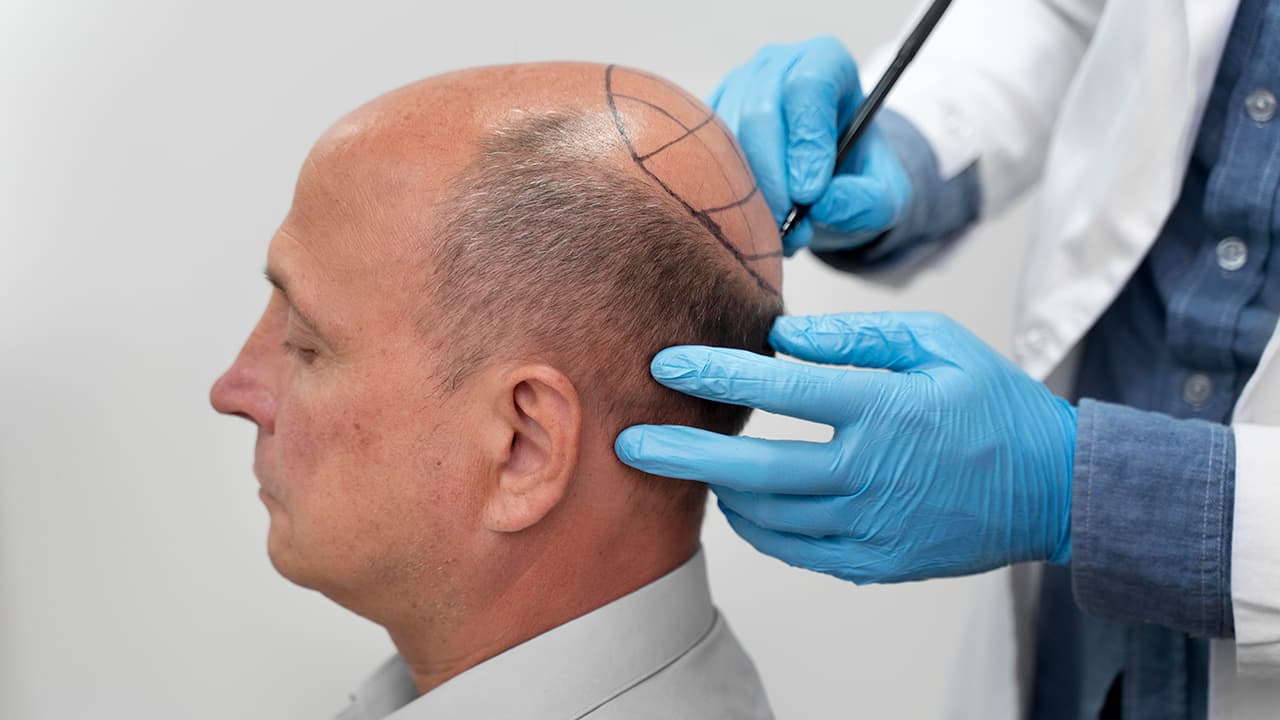
A crown hair transplant addresses thinning and bald spots at the vertex, the spiral swirl at the back of the scalp. The procedure relocates donor follicles into the natural growth pattern of the crown using high-density placement to restore coverage at this most challenging zone.
Patients often wonder if surgical restoration is physically possible for the highest point of the scalp. The clinical answer is highly dependent on the exact stage of the hair loss. The medical approach for a completely bald crown hair transplant differs entirely from treating early-stage thinning.
Surgical success in this region demands a deep understanding of vertex anatomy. The medical team customises the entire surgical plan based on the existing tissue conditions while adhering to strict ethical protocols.

The crown is the most technically demanding zone of the scalp because hair grows in a circular whorl rather than a single direction. A successful crown hair transplant requires the surgeon to identify the natural pivot point and reproduce the spiral growth pattern around it. Hairtec applies single-graft DHI placement to recreate density without disrupting the surrounding native hair.
Coverage is built layer by layer with carefully controlled angle changes. The result is a vertex zone that lays flat under styling, blends with the parietal regions, and avoids the artificial doll-hair effect common with strip-based methods on this part of the scalp.
Patients researching restorative options consistently ask do crown hair transplants work permanently. The clinical answer is an absolute yes. However, achieving high density in the vertex is notoriously more difficult than restoring a receding frontal hairline.
The vertex is often referred to as the black hole of hair restoration in the medical community. The anatomical challenges require an exceptionally high level of surgical skill.
To guarantee that the transplanted follicles survive this challenging environment, Hairtec specialists carefully select the strongest, thickest multi-hair grafts from the donor area. These robust follicles possess a much higher survival rate in the low-blood-supply environment of the vertex.
| Clinical Feature | Sapphire FUE Method | DHI (Choi Pen) Method |
|---|---|---|
| Ideal Patient Profile | Completely bald crown requiring maximum coverage | Thinning crown with existing native hair |
| Implantation Tool | Ultra-sharp Sapphire blades | Specialised Choi Implanter Pen |
| Native Hair Protection | Low (Blades risk cutting nearby healthy roots) | Maximum (Pen navigates safely between existing hairs) |
| Surgical Action | Opens hundreds of channels first, implants later | Punctures and implants the follicle simultaneously |
| Recovery Phase | Physical Appearance | The Biological Reality |
|---|---|---|
| First 30 Days | Complete Shedding (Shock Loss) | Temporary hair shafts fall out while the vital roots anchor deeply. |
| Crown Hair Transplant 3 Months | Extremely Fine Baby Hairs | Dormant follicles end their resting phase and push through the skin. |
| Crown Hair Transplant 6 Months | 30 to 40 Percent Visible Density | Early maturation begins as hairs thicken and gain natural pigment. |
| 12 to 18 Months | Complete Aesthetic Density | The circular whorl fills in entirely and the hairs fully mature. |

Patients face two highly specific practical challenges immediately following surgery on the vertex. Managing these physical hurdles correctly dictates the survival rate of the new grafts.
A failed procedure in the vertex area usually stems from poor surgical technique, inadequate graft estimation, or clinical fatigue. The Hairtec protocol guarantees that these specific risks are eliminated entirely before the patient ever travels to the Netherlands.
Why crown hair transplant fail scenarios happen is directly linked to the massive surface area of the vertex. Inexperienced surgeons often fail to extract enough donor follicles, leaving the patient with a thin, see-through appearance.
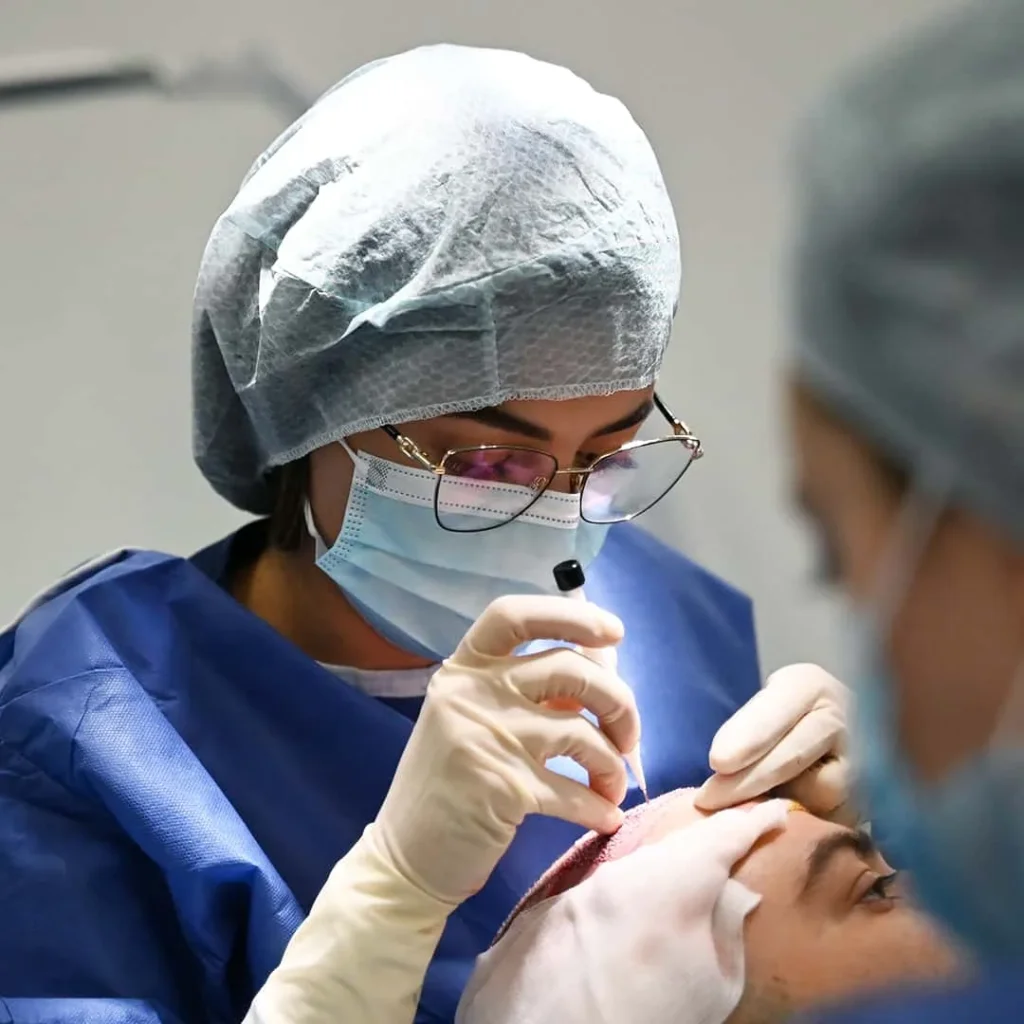
Navigating the financial and medical aspects of a crown hair transplant UK market can feel overwhelming. Patients frequently encounter clinics that add hidden fees for specific extraction tools or charge exorbitant prices per graft. Because the vertex requires a massive number of follicles, the total local investment often becomes prohibitive.
Hairtec provides a highly structured, secure alternative by treating the trip to the Netherlands as a premium healthcare service rather than standard medical tourism.
Yes. Restoring a completely bald vertex is highly successful provided the patient has a strong, dense donor area at the back of the head. The medical team extracts a high volume of grafts and distributes them strategically to create a natural, solid covering over the empty surface.
The crown region at the highest point of the head naturally possesses a much lower blood supply compared to the frontal hairline. Because blood carries the vital nutrients and oxygen required for cellular division, the transplanted follicles take significantly longer to wake up, mature, and achieve their final aesthetic thickness.
The exact number depends entirely on the physical size of the thinning area and the density of the donor region. The vertex generally requires anywhere between 2000 and 4000 grafts to achieve a full, natural look that completely blocks light from hitting the scalp. The clinical team confirms the precise number during the online digital assessment.
The procedure is exceptionally comfortable. Specialists administer an advanced local anaesthesia protocol that numbs the entire scalp completely before any extraction begins. Because the medical team uses microscopic punches ranging from 0.6 mm to 0.7 mm, tissue trauma is minimal and post-operative discomfort is exceptionally low.
No. Advanced micro-extraction techniques leave no visible linear scarring at the back of the head. The microscopic extraction points heal incredibly fast, and the surrounding native hair easily conceals the donor area within a few days of returning to the UK.
Yes. Female patients frequently experience diffuse thinning around the vertex and the parting. Specialists utilise the Direct Hair Implantation method to place new follicles safely between the existing long hairs. This safely increases density without requiring the female patient to shave the top of her head.