Hairtec Hair Transplant Clinic

A successful surgery is only half the battle. Proper hair transplant aftercare dictates the final density and survival rate of the new follicles. The Hairtec clinical protocol provides strict guidelines for washing, sleeping, and daily activities to protect the 2026 investment. Review the complete post-operative timeline below to master the recovery phase.

Walking out of the Delft clinic with a restored hairline is an incredible feeling. However, those newly implanted grafts are extremely fragile during the first few weeks. The scalp requires strict maintenance to heal correctly. Ignoring clinical instructions often leads to displaced follicles, severe infections, or a patchy final result.
Proper aftercare after hair transplant procedures relies on a combination of rest, hydration, and specific hygiene routines. The medical team provides every patient with a detailed recovery manual. This guide outlines exactly how to handle the scalp from the first night back at the hotel to the final 12-month check-up.
Because the UK market is flooded with conflicting advice, Hairtec relies solely on proven Dutch medical standards. Following this exact timeline locks in the highest possible follicle survival rate.
Healing is a biological process that follows a strict schedule. While every patient recovers at a slightly different pace, the scalp goes through five distinct phases. This pillar page serves as the central hub for the entire recovery protocol.
The medical team breaks down the timeline into specific milestones. Click the buttons below to read the deep-dive guides for each specific recovery phase:
The first 72 hours are focused strictly on preventing bleeding, managing initial swelling, and keeping the fragile grafts locked in place.
[READ MORE: 3 Days After Hair Transplant ➔]
Scabs begin to form across the scalp. The clinical washing routine starts here to remove dried blood and soothe the intense itching sensation safely.
[READ MORE: 1 Week After Hair Transplant ➔]
All crusts and scabs must be completely gone by this point. The follicles safely anchor into the tissue, and patients can return to a more normal daily routine.
[READ MORE: 2 Weeks After Hair Transplant ➔]
The new hairs begin to fall out. This biological reaction is completely normal, expected, and paves the way for permanent growth cycles to begin.
[READ MORE: 1 Month After Hair Transplant ➔]
New, permanent hairs push through the scalp. Density begins to visibly improve, and styling the new hair becomes possible.
[READ MORE: 4 Months After Hair Transplant ➔]
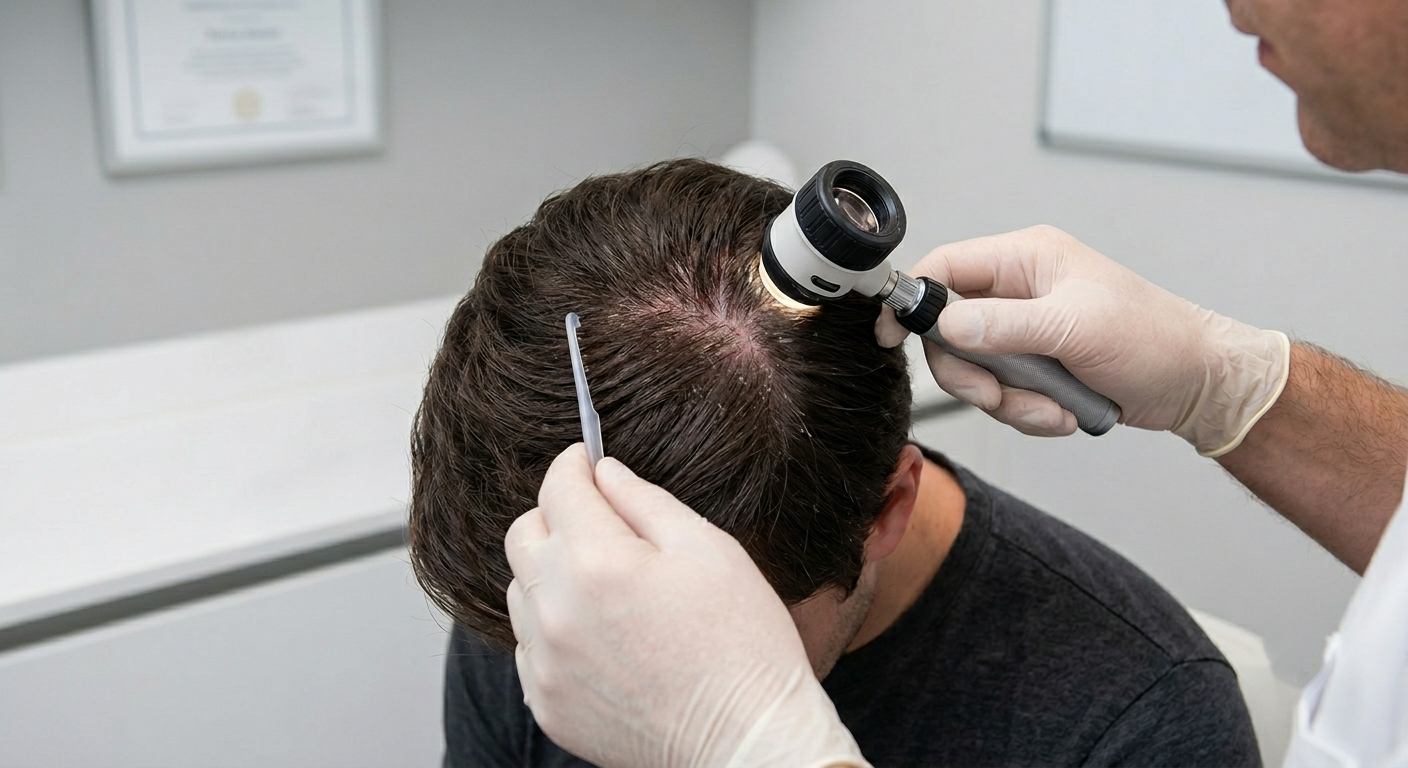

After the treatment your scalp may feel tight or sensitive. Mild swelling or redness is normal and usually disappears on its own after a few days. You will receive a neck pillow and clear instructions from us. The neck pillow helps you lie slightly higher and keeps your head in place, so the grafts are not put under pressure. That way no pressure is placed on the new hairs. The medication helps with pain and keeps the skin from becoming inflamed. Rest is the most important thing now. Do not do anything strenuous. That gives your body the chance to recover properly. Make sure your head is well protected and do not touch the treated areas, so the grafts can settle firmly.

Returning to the UK immediately after surgery is a major concern for corporate professionals. The good news is that airplane cabin pressure does not harm the new follicles. The real threat lies in the physical environment.
Women and professionals opting for unshaven FUE face a unique set of daily challenges. Managing long native hair while protecting newly implanted follicles requires a highly specific routine.
Washing long native hair means keeping chemicals away from the surgical zone during the first week. Tipping the head back gently in the shower prevents heavy water pressure and shampoo runoff from hitting the recipient area. Towel drying is strictly prohibited. Long hair must air dry naturally. Using a hairdryer is only acceptable on a strict ‘cold’ setting, kept at least 30 centimeters away from the scalp.
For female patients dealing with diffuse thinning, Platelet-Rich Plasma (PRP) therapy acts as a biological shield. It strengthens existing native hairs and accelerates the internal healing of the new grafts simultaneously.
Restoring facial hair requires a slightly different post-operative approach. The skin on the face is highly mobile, which puts extra stress on the newly implanted roots. Facial hair transplant aftercare demands strict limits on facial movements to prevent popping the grafts out.
| Activity / Habit | Restriction Period | Clinical Reason |
| Sleeping Flat | First 5 Nights | Use a neck pillow at a 45-degree angle to stop swelling and protect grafts. |
| Alcohol Consumption | First 5 Days | Thins the blood significantly and increases the risk of early bleeding. |
| Sexual Activity | First 7 to 10 Days | Raises blood pressure and induces sweating, risking graft displacement. |
| Smoking / Vaping | First 14 Days | Nicotine constricts blood vessels, starving new grafts of oxygen. |
| Wearing Hats | First 14 Days | Physical friction from caps easily tears the new roots from the scalp. |
| Heavy Gym / Sweating | First 14 Days | High blood pressure forces grafts out. Sweat causes severe infections. |
| Swimming (Pool/Sea) | First 30 Days | Chlorine and ocean bacteria easily infect the open micro-wounds. |
| Direct Sunlight | First 30 to 60 Days | UV rays damage healing tissue and cause permanent skin discoloration. |
Does the surgical technique change the recovery rules? The short answer is no. Both methods require the same level of hygiene and physical protection.
FUE hair transplant aftercare involves managing the tiny channels opened by the sapphire blade. The scalp experiences moderate swelling, and the scabbing phase is slightly more pronounced. The strict washing protocol is vital here to keep those channels clean.
DHI hair transplant aftercare is often slightly faster. Because the Choi Implanter Pen punctures and implants simultaneously, overall tissue trauma drops. Patients usually report less bleeding and a quicker reduction in redness. Regardless of the method, the 14-day anchoring rule applies equally to both techniques.
After twelve months, the final result is visible. The new hairs have fully grown in and you have a natural head of hair again. During this visit we compare before and after photos. This is often an emotional moment, because patients really see the difference.
Using standard supermarket shampoos on a healing scalp is a massive mistake. Commercial products contain harsh chemicals, parabens, and heavy perfumes that irritate the open wounds and damage the vulnerable follicles.
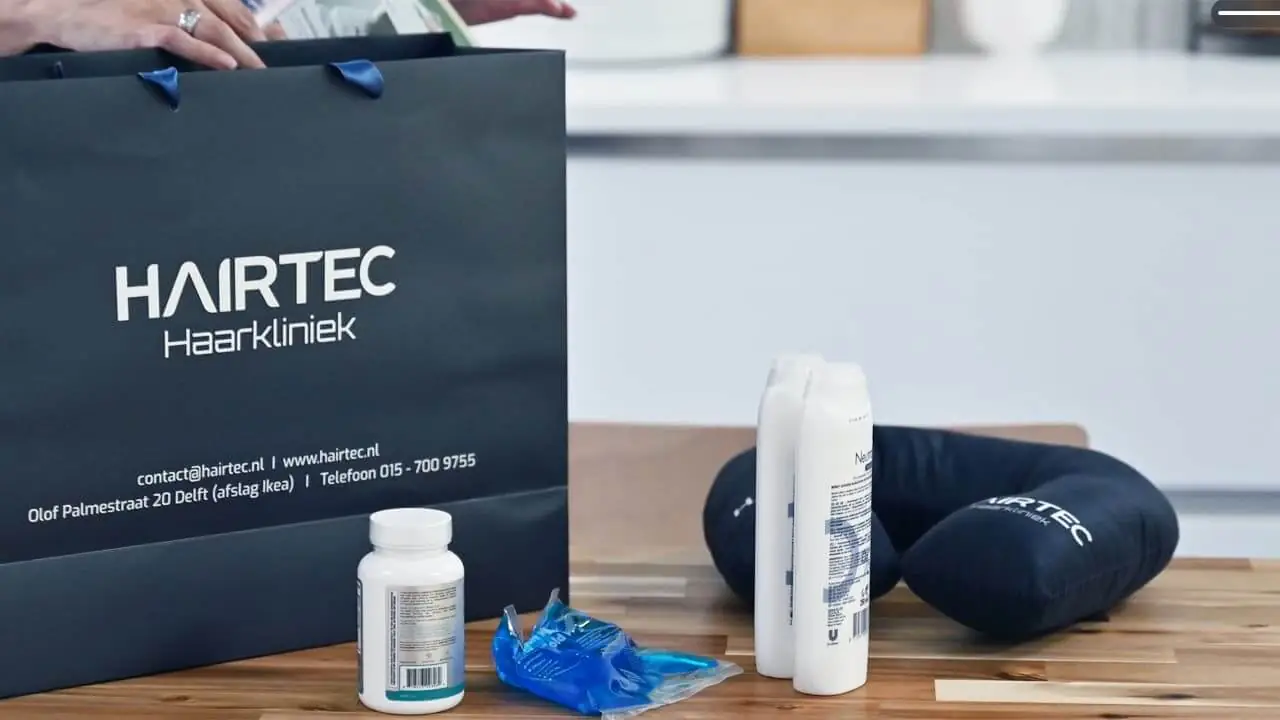
The Hairtec team supplies a specialized after hair transplant care kit. This medical-grade package includes everything needed for a safe recovery:
Patients must strictly avoid styling gels, waxes, or heavy hairsprays for at least one full month following the procedure.
Proper aftercare of hair transplant procedures does not end at the departure gate. Returning to London with a newly operated scalp often feels daunting. Hairtec removes this anxiety completely with a direct, 24/7 VIP communication line.
Patients are never left alone. If a medical concern arises at 2 AM on a Sunday, the Dutch clinical team is immediately accessible via a dedicated WhatsApp channel for instant advice.
Routine monitoring is also handled remotely to eliminate the stress of domestic clinic commutes. Patients submit high-resolution photos through the portal at specific intervals:
Patients must sleep on the back with the head elevated at a 45-degree angle. Using an airplane neck pillow stops the head from rolling sideways. This prevents the newly implanted grafts from rubbing against the mattress.
Intense redness usually subsides within 10 to 14 days. By the third week, the scalp looks mostly normal, though a faint pink tone might linger for patients with very fair skin. Cosmetic concealers or foundation powders cannot be used on the scalp for at least one full month.
Itching is a normal biological sign of healing. However, scratching the scalp will permanently destroy the follicles. Patients must use the provided sterile saline sprays to soothe the area and gently tap the scalp instead of using fingernails.
Office workers typically return to their desks within 5 to 7 days. Those working in physically demanding jobs or dusty environments must wait at least 14 days to prevent infections and graft displacement.
By day 15, the follicles are permanently anchored into the tissue. Patients can return to normal showering routines, resume light gym workouts, and start wearing loose-fitting hats safely.
Yes. The back of the head heals quickly but often feels tight and sore. Applying the clinical lotion to the donor area helps soften the skin and reduces the physical tightness significantly.
The core medical rules remain unchanged. Keep the scalp clean, avoid physical trauma, and strictly use the pH-balanced medical shampoos provided by the Delft clinic until the one-month mark.
Facial skin moves constantly. Beard transplant patients must eat soft foods for three days to limit chewing and strictly avoid sleeping on their sides to protect the facial grafts from physical pressure.
Patients must avoid razors and clippers on the newly implanted facial hair for at least 30 days. The surgical team will provide a specific timeline for when normal grooming can resume based on individual healing.
Around the one-month mark, the transplanted hairs will shed and fall out. Patients might also notice temporary thinning in the donor area at the back of the head. This is a painless, temporary biological phase. The root remains safely asleep beneath the skin before permanent growth begins.
While early growth is visible around month four, the full density and final aesthetic result take between 12 to 18 months to fully mature, especially for crown restorations.
Not at all. Patients simply avoid washing the hair or sweating heavily for 24 hours after the injection session. Normal routines resume the very next day.