
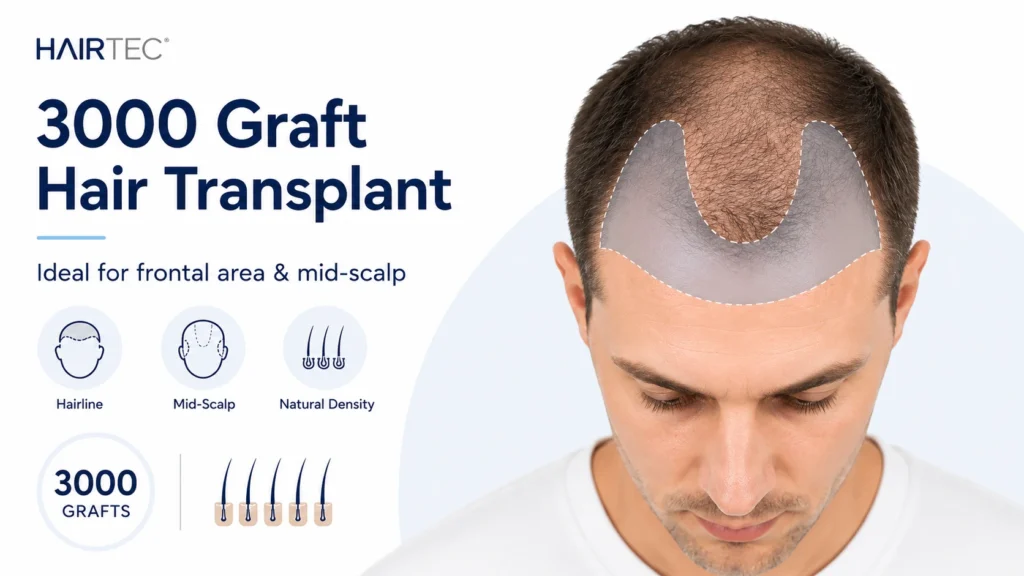
A 3000 graft hair transplant is a major reconstructive surgical procedure designed for patients experiencing advanced stages of hair loss. Sitting at the threshold of what is clinically considered a mega session, this volume provides a massive influx of new follicular units to areas completely depleted by genetic thinning. The primary clinical objective is to restore significant surface area, often covering both the frontal third of the scalp and reaching back toward the vertex, without compromising the structural integrity of the permanent donor zone.
Moving this volume of tissue in a single surgical session presents a complex biological and architectural challenge. The Hairtec medical team must execute precise extraction mathematics to harvest thousands of follicles safely while keeping the out of body time to an absolute minimum. When managed under strict European medical protocols, utilizing advanced cold storage and direct implantation tools, this procedure successfully reverses severe Norwood Stage 4 or Stage 5 baldness and delivers a permanent, high density result.
Is 3000 Grafts a Lot for a Hair Transplant?
Patients evaluating their surgical options frequently ask is 3000 grafts a lot for hair transplant procedures. In the context of modern hair restoration, it is considered a very large volume. Because each follicular unit contains an average of two to three individual hairs, a 3000 graft session effectively moves between 6000 and 7500 individual hairs across the scalp in a single day.
This volume sits near the upper limit of what can be safely extracted in one session for the average patient. Pushing beyond this number often risks severe trauma to the scalp and dangerous depletion of the donor region. The clinical team must evaluate the patient scalp laxity and native density carefully. If the donor area is naturally thin, taking 3000 grafts may not be biologically viable, and the surgical plan must be adjusted downward to protect the patient.
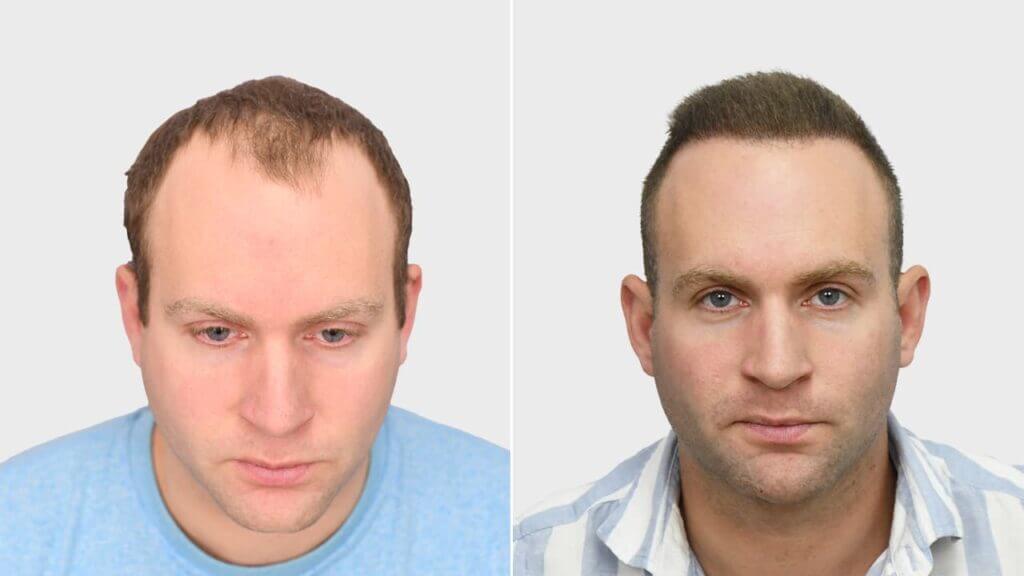
Managing Donor Area Extraction Safely
The donor area is the horseshoe shaped region at the back and sides of the head. This zone contains hair follicles that are genetically resistant to the hormone responsible for male pattern baldness. When performing a hair transplant 3000 grafts extraction, managing this finite resource is the most critical part of the surgery.
The clinical team employs a microscopic geometric extraction grid. They extract only one out of every four or five available hairs in a specific micro zone.
- Micro Punch Selection. Utilizing ultra fine 0.7mm to 0.85mm titanium punches to minimize the footprint of the extraction.
- Avoiding Overharvesting. Preserving enough native hair so the back of the head does not look moth eaten or patchy when cut short.
- Preserving Future Capacity. Leaving enough healthy follicles in the safe zone in case the patient requires a small touch up ten years later.
- Rapid Healing. Creating microscopic circular incisions that heal rapidly within seven days without leaving linear scars.
3000 Grafts Hair Transplant Coverage Area
Understanding the 3000 grafts hair transplant coverage area requires a mathematical approach to scalp anatomy. At a standard clinical packing density of forty follicular units per square centimeter, a 3000 graft session covers exactly 75 square centimeters of completely bald scalp. This is a substantial area, roughly equivalent to the size of a standard adult hand print.
This massive coverage capacity allows the surgical team to completely rebuild a receded hairline, fill in the temporal peaks, and continue the density back through the mid scalp. The visual impact of this coverage depends on the physical characteristics of the hair shaft itself. Thick, coarse hair provides superior light blockage, making the 75 square centimeters look incredibly dense. Fine or thin hair provides less light blockage, meaning the scalp may still be slightly visible under harsh lighting despite the high graft count.
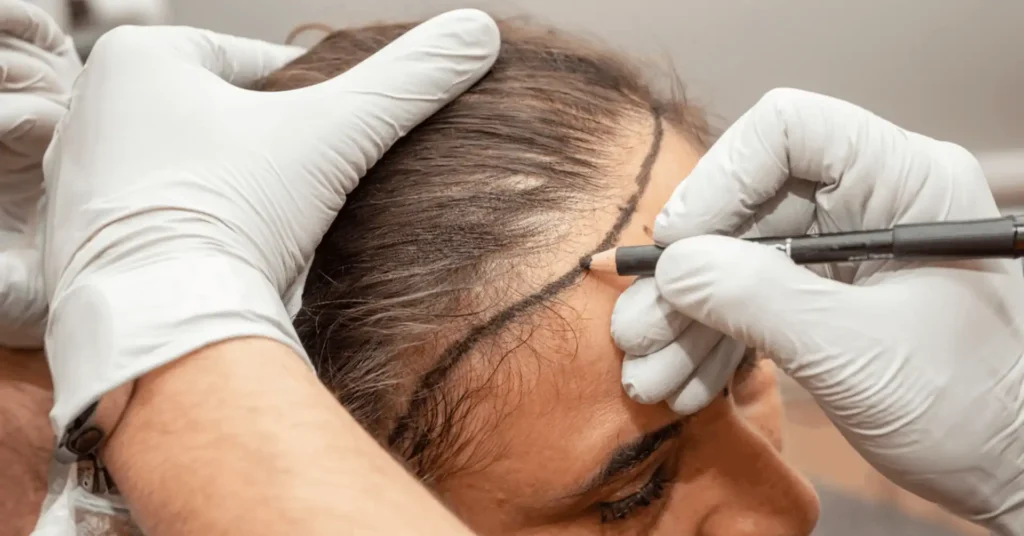
Rebuilding the Frontal Band and Mid Scalp
The frontal band is the most cosmetically significant area of the face. For a patient requiring 3000 grafts, this area is usually completely devoid of hair. The Hairtec medical team constructs a new anterior boundary using a highly calculated distribution strategy.
- The Micro Irregular Hairline. Soft, single hair units are placed in a slightly zigzag pattern at the very front to mimic nature.
- The Density Core. Two and three hair units are packed directly behind the hairline to create a physical block of volume.
- The Mid Scalp Transition. The remaining grafts are distributed evenly across the top of the head, blending seamlessly into the existing native hair at the back.
3000 Grafts Hair Transplant Crown Density
Treating the vertex presents unique architectural challenges. A 3000 grafts hair transplant crown restoration requires the surgeon to recreate the natural whorl, the spiral pattern where hair changes direction rapidly.
The crown is often referred to clinically as a “black hole” for hair grafts. Because the hair in the whorl grows outward in a circular fan shape, the follicles do not overlap each other to block light the way they do at the front of the head. Therefore, achieving the illusion of density in the crown requires a massive amount of grafts. If a patient is completely bald at the front and the crown, 3000 grafts will usually be prioritized for the front and mid scalp, leaving the crown for a potential second session twelve months later.
| Treatment Zone | Coverage Strategy | Graft Allocation (Approx.) |
|---|---|---|
| Frontal Third Only | Maximum density packing for severe recession | 2500 to 3000 Grafts |
| Frontal Band + Mid Scalp | High frontal density, moderate mid scalp blending | 3000 Grafts Total |
| Crown Vertex Only | Recreating the whorl pattern with overlapping layers | 2000 to 3000 Grafts |
| Full Scalp (Front to Back) | Light coverage everywhere; high density not possible | Not Recommended |
How Long Does a 3000 Graft Hair Transplant Take?
Patients often ask how long does a 3000 graft hair transplant take from the initial anaesthesia to the final bandage. Because it is a highly labor intensive surgical process, a session of this magnitude requires a full, dedicated day at the clinic. The procedure typically lasts between seven and nine hours.
Speed is the enemy of graft survival. Follicles are microscopic living organs that require a constant blood supply. Once extracted, they begin to suffer from ischemia. A highly skilled medical team works at a deliberate, methodical pace to balance the need to minimize out of body time with the requirement for absolute surgical precision.
Clinical Pacing for FUE and DHI Methods
The surgical timeline is strictly divided into distinct clinical phases. The team must manage patient fatigue and verify that the local anaesthesia remains effective throughout the long day.
- Phase 1: Extraction (3 to 4 Hours). The patient lies face down while the surgeon carefully harvests the 3000 units from the occipital region.
- Phase 2: Cold Storage. The grafts are counted, sorted by hair count, and submerged in specialized HypoThermosol cooling solutions to suspend their metabolic rate.
- Phase 3: Implantation (4 to 5 Hours). The patient sits upright. The team loads the follicles into DHI implanter pens and the surgeon injects them directly into the scalp at the precise angle required.
- Phase 4: Biological Therapy. Platelet Rich Plasma is injected into the recipient zone to flood the area with growth factors and stimulate immediate blood vessel formation.
Hairtec Medical Standards for 3000 Grafts in the Netherlands
Executing a 3000 graft mega session safely requires an elite clinical environment. Hairtec operates under the stringent and highly regulated Dutch healthcare framework in Delft, Netherlands. This environment prioritizes absolute patient safety, strict cross infection controls, and data driven surgical outcomes.
The Hairtec medical team relies exclusively on the Direct Hair Implantation method for large sessions. Using traditional steel blades to open 3000 separate channels creates massive tissue trauma and significant bleeding. The DHI pen eliminates this preliminary cutting phase. The sharp, cylindrical needle pierces the skin and deposits the follicle simultaneously. This drastically reduces scalp trauma, limits bleeding, and accelerates the post operative healing timeline.
Hairtec provides a fully managed logistical pathway for patients traveling from the UK. The process begins with advanced digital diagnostics to verify that the patient actually possesses 3000 healthy grafts in their donor area. Upon arrival in the Netherlands, patients receive VIP airport transfers and premium private accommodation. This closed loop system allows the patient to undergo their extensive procedure, receive immediate post operative care, and return home safely.
How Much is a 3000 Graft Hair Transplant?
Budgeting for a major restorative procedure is a primary concern for patients. Individuals researching how much is a 3000 graft hair transplant will encounter vastly different financial models depending on the country and the clinic operational structure.
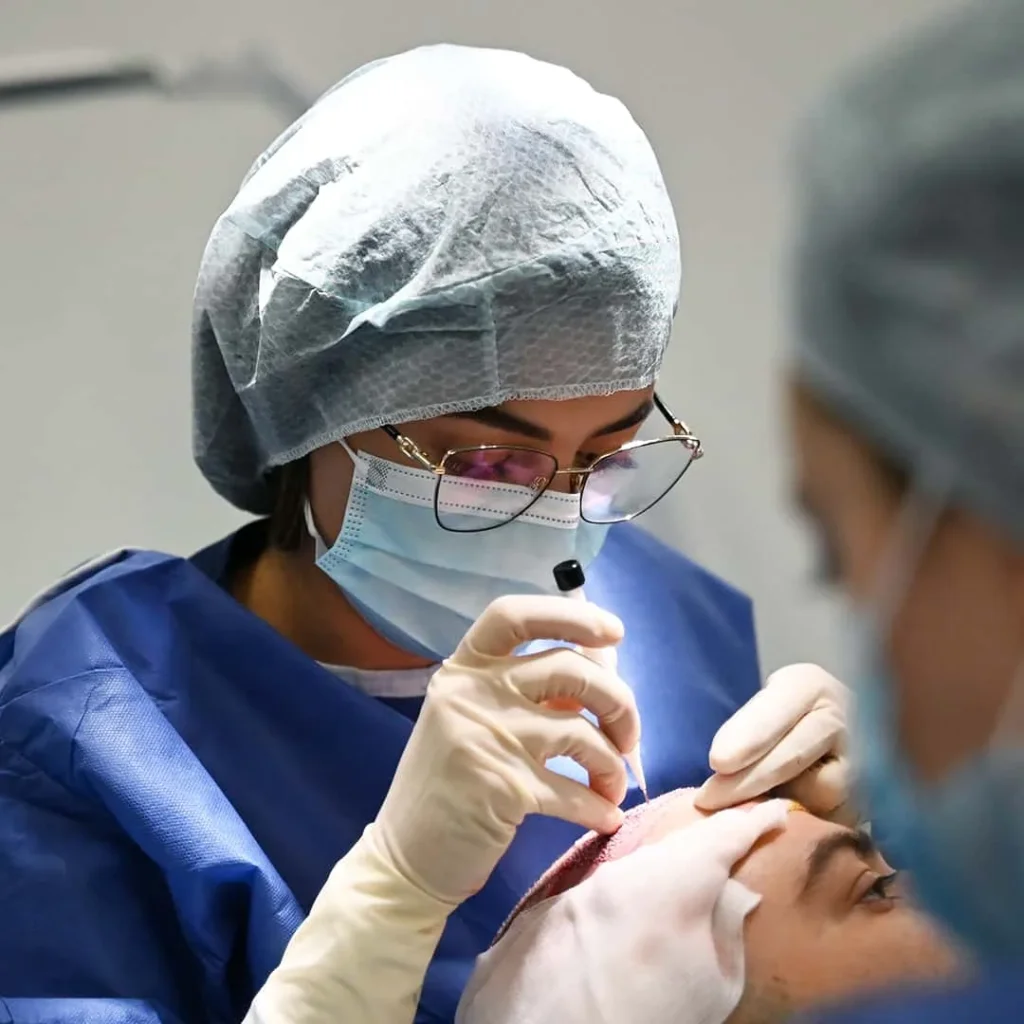
The 3000 grafts hair transplant cost is dictated by the massive amount of clinical labor required. A surgery of this size occupies an entire surgical theater for a full day and requires a primary surgeon alongside three to four dedicated clinical technicians to load the implanter pens continuously.
3000 Grafts Hair Transplant Cost UK Pricing Models
When searching for 3000 grafts hair transplant cost uk options, patients find that local pricing is exceptionally high. Clinics in central London operate on a strict per graft financial model. Because 3000 grafts is a very large volume, multiplying this number by a high premium rate results in an astronomical final bill. Furthermore, essential clinical support like PRP therapy or advanced DHI tools are often billed as expensive add ons.
To avoid these inflated local costs, many patients opt for medical travel. Regulated European clinics provide a session based financial model. This means the patient pays a flat, comprehensive rate for the surgical day, regardless of whether the surgeon extracts 2800 or 3100 grafts to perfect the aesthetic result. This provides total financial transparency and allows the surgeon to focus strictly on the medical outcome rather than a running cost tally.
Frequently Asked Questions About 3000 Graft Hair Transplant
How much area does a 3000 graft hair transplant cover?
At a standard clinical density, it covers approximately 75 square centimeters of completely bald scalp. This is generally enough volume to rebuild the entire frontal hairline, the temporal angles, and a significant portion of the mid scalp.
Is 3000 grafts a lot for hair transplant?
Yes. It is considered a large volume procedure, often referred to as a mega session. It requires excellent donor area density to perform safely and takes a full day in the surgical theater to complete the extraction and implantation phases.
Can 3000 grafts cover the front and the crown?
Usually not with high density. If a patient is completely bald at the front and the crown, spreading 3000 grafts across the entire head results in a very thin, sparse look. Clinics recommend using the volume to build high density at the front and addressing the crown later.
How much does a 3000 grafts hair transplant cost in the UK?
Pricing in the UK is very high because clinics typically charge per individual graft. London clinics often charge premium rates, making a large session financially restrictive for many. Regulated clinics in Europe offer comprehensive packages that are much more cost effective.
How long does a 3000 graft hair transplant take to complete?
A session of this magnitude takes between seven and nine hours to complete safely. The medical team works at a deliberate pace to minimize surgical trauma, protect the extracted follicles, and manage patient comfort throughout the long day.
Will my donor area look thin after extracting 3000 grafts?
If performed correctly by a skilled medical team, the donor area will not look thin. Surgeons use a strict geometric pattern to extract only a fraction of the available hair in the safe zone, leaving the remaining hair to cover the micro incisions perfectly.
Can I get a 3000 graft hair transplant without shaving?
No. For a session of this size, full head shaving is a strict clinical requirement. The medical team needs maximum visibility of the donor area to extract 3000 grafts safely without causing adjacent follicle damage.
What is the survival rate for a hair transplant of 3000 grafts?
When executed under strict clinical protocols using DHI tools and advanced cold storage solutions, the permanent survival rate exceeds 90 percent. Integrating PRP therapy during the surgery further maximizes blood flow and cellular survival.
How long is the recovery time for 3000 grafts?
The visible physical healing of the micro incisions takes roughly seven to ten days. During this period, you will experience some swelling and crusting. Most patients return to normal social and professional activities after two weeks.
When will I see the final results of a 3000 graft transplant?
The transplanted hair will shed in the first month due to surgical shock. Permanent new growth begins at the third month. The hair continues to thicken and mature, reaching its final aesthetic result twelve to fifteen months after the procedure.
How we reviewed this article:
Hairtec.co.uk has strict sourcing guidelines and relies on peer-reviewed studies, academic research institutions, and medical journals and associations. We only use quality, credible sources to ensure content accuracy and integrity. You can learn more about how we ensure our content is accurate and current by reading our editorial policy.
- Gabel S (2013). Megasessions: surgical indications and technical perspectives. Facial Plastic Surgery Clinics of North America https://pubmed.ncbi.nlm.nih.gov/24017983/
- Nakatsui T, Wong J, Groot D (2008). Survival of densely packed follicular unit grafts using the lateral slit technique. Dermatologic Surgery https://pubmed.ncbi.nlm.nih.gov/18462426/
- Chouhan K et al. (2019). Approach to Hair Transplantation in Advanced Grade Baldness by Follicular Unit Extraction: A Retrospective Analysis of 820 Cases. Journal of Cutaneous and Aesthetic Surgery https://pmc.ncbi.nlm.nih.gov/articles/PMC6967160/
Our experts continually monitor the health and wellness space, and we update our articles when new information becomes available


