Hairtec Hair Transplant Clinic

The morning mirror check before heading to the office often reveals a harsh reality. A hairline that sits slightly higher than the previous year or a thinning crown under bright lights causes immediate concern.
Figuring out how to stop the shedding is a complex process that requires moving beyond confusing medical jargon. Finding an effective hair loss treatment starts with clinical honesty and a clear understanding of the biological factors involved.
| Follicle Status | Biological Reality | Required Clinical Intervention |
| Early Thinning | Roots are active but shrinking due to DHT or stress | Advanced cellular therapies and targeted plasma treatments |
| Advanced Miniaturisation | Follicles produce microscopic hairs and are highly vulnerable | Aggressive medical management and potential surgical planning |
| Complete Baldness | Follicles are entirely dead and the skin appears smooth | Permanent surgical restoration using genetic-resistant grafts |
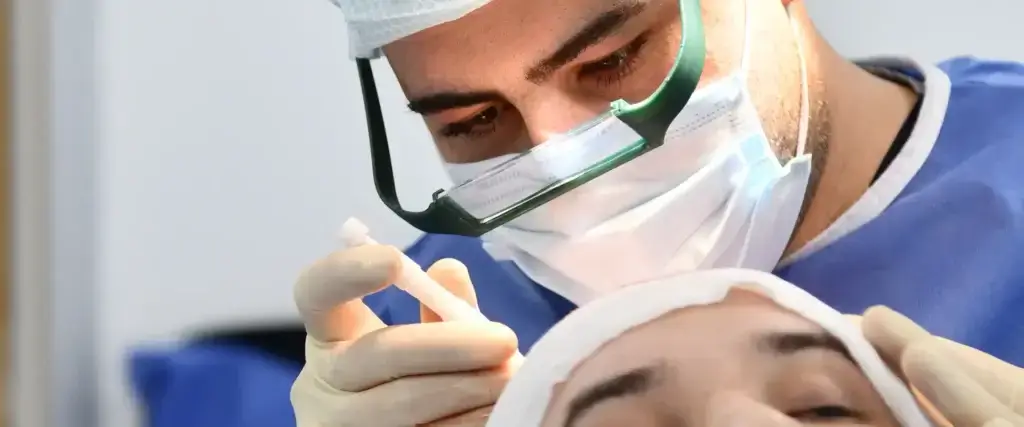
DHI offers the best chance of a successful hair transplant by placing the follicles closely next to each other, achieving the highest possible density. Thanks to the refined technique, this is done without damage to the scalp or blood vessels, allowing the patient to recover much faster.

The Sapphire Follicular Unit Extraction (FUE) treatment method is, thanks to the use of special sapphire blades, currently the most advanced and least invasive approach for performing the FUE hair transplant successfully. We have extensive experience with this method and have continued to innovate it based on our own clinical insights.

Men choose a beard and/or moustache hair transplant for various reasons. Hair density in this area may be perceived as a problem, or there may be bald patches or scars that need to be camouflaged. In these cases, a hair transplant provides an effective solution.

Eyebrows shape a major part of your facial appearance. However, eyebrow hairs can fall out due to follicle damage or excessive plucking. We can restore sufficient volume in your eyebrows with a lifetime guarantee of fuller eyebrows, tailored entirely to your features.

The receptor treatment uses the body’s own regenerative capacity to improve circulation in the scalp. Based on positive results already achieved in the sports world, this treatment is increasingly being used as a therapy that acts as an energy booster for the scalp and hair, slowing hair loss and in some cases stopping it completely.

Hair grows optimally with a nutrient-rich balance. XL Hair can reinforce that, as it is a mesotherapy made up of a cocktail of natural hyaluronic acid and a rich vitamin complex (47 active ingredients, including antioxidants, vitamins/minerals, polyphenols, amino acids and growth factors) that counteracts hair loss and provides extra stimulation of hair growth in the existing hair follicles.
Male pattern baldness follows a highly predictable genetic sequence. This specific condition affects millions and accounts for the vast majority of surgical consultations globally.
The primary biological trigger is a genetic sensitivity to a hormone called DHT. This hormone attaches directly to the hair follicles and forces them to shrink prematurely.
Selecting the hair loss treatment for men depends precisely on the current stage of this genetic progression. If the shedding is caught early enough, medical management can halt the recession and thicken the existing native hair.
However, if the genetic loss is advanced, moving healthy roots to the empty areas becomes the only viable scientific option. Achieving permanent density requires following a strict clinical protocol.
A receding hairline is usually the first visible symptom of male genetic thinning. This structural change alters facial symmetry and ages an individual prematurely.
Precision surgery in this frontal area focuses entirely on creating a soft and natural frame. The medical team works to replicate the exact density, angle, and direction of the original native growth.
Detailed clinical information on these specific restorative techniques is fully available on the Hairline Hair Transplant and Hair Transplant Temples pages.
Specialists carefully evaluate future recession patterns before finalising any frontal design. This ensures the new hairline remains aesthetically appropriate decades after the procedure.
The crown or vertex area presents a highly unique challenge in the restoration field. Hair in this posterior zone grows in a complex spiral pattern that demands extreme surgical precision to mimic.
Thinning in the crown frequently develops slowly. It often goes completely unnoticed until a significant amount of structural density is lost.
Covering this specific zone requires a high volume of strong grafts to achieve a full visual result. Individuals interested in addressing vertex balding can review the detailed protocols on the Crown Hair Transplant page.
Managing crown loss effectively usually requires combining surgical restoration with ongoing medical therapies to protect the surrounding vulnerable hairs.
Female hair loss presents entirely different clinical challenges compared to male pattern baldness. Instead of a distinct receding hairline, the condition typically manifests as diffuse thinning across the entire scalp.
The parting widens significantly and the scalp becomes much more visible under bright lighting. Identifying the best hair loss treatment for female patients requires understanding these fundamental biological differences.
The table below highlights the distinct clinical variations between male and female shedding patterns.
Clinical Feature | Male Pattern Baldness | Female Pattern Hair Loss |
Primary Visual Sign | Receding frontal hairline and bald vertex | Diffuse overall thinning and a widening parting |
Biological Trigger | High genetic sensitivity to DHT | Major hormonal shifts and severe stress |
Diagnostic Approach | Visual assessment and genetic history | Requires extensive blood panels and endocrinology review |
Finding a reliable female hair loss treatment depends entirely on identifying the exact internal trigger. Once medical specialists stabilise the underlying hormonal issue, the clinical focus shifts directly to restoring density.
Treating widespread thinning requires a highly targeted medical approach. If the follicles are still active but producing weak hair shafts, advanced cellular therapies offer the highest success rate.
Specialists use concentrated blood-derived growth factors to stimulate the shrinking roots directly.
For individuals experiencing severe loss that does not respond to medical management, surgical intervention is possible. Detailed information on managing low-density areas is available on the Thin Hair Transplant page.
The clinical priority is always to protect and strengthen the existing native hair before considering any invasive procedures.
When cellular therapies are insufficient, surgical restoration becomes the most effective pathway. Many local clinics avoid treating women due to the complexity of the diffuse shedding pattern.
Individuals seeking a permanent solution can review the specific surgical methodologies on the Hair Transplant for Women page.
Not every patient requires or qualifies for immediate surgical intervention. A highly effective hair loss treatment often involves advanced biological therapies.
These clinical protocols utilise the regenerative power of the human body to heal damaged tissue and stimulate dormant follicles.
Extracting a small blood sample allows clinical specialists to isolate highly concentrated growth factors. Injecting this powerful biological serum directly into the scalp forces shrinking hair roots back into a healthy growth phase.
This medical approach is exceptional for patients in the early stages of thinning. Comprehensive clinical data regarding this specific protocol is available on the PRP Hair Treatment page.
Consistent application over several months significantly thickens the hair shafts and extends the natural biological growth cycle.
Alopecia encompasses various autoimmune conditions that cause sudden and unpredictable hair loss. Treating these conditions requires a highly specialised medical strategy rather than standard cosmetic solutions.
The clinical team focuses on calming the severe scalp inflammation and suppressing the autoimmune response. Detailed information on navigating these complex conditions is outlined on the Alopecia Hair Transplant page.
Surgery is only considered when the autoimmune condition has been completely dormant for an extended period. This strict medical rule ensures the new grafts survive permanently.
Hair restoration extends far beyond standard male pattern baldness. Many patients require highly specialised surgical interventions to correct previous mistakes or reconstruct specific facial features.
The Dutch medical protocols provide extreme precision for these delicate cosmetic requirements. Every facial procedure demands a unique surgical approach to guarantee natural alignment.
Facial hair plays a massive role in overall aesthetic balance. Some individuals struggle with patchy beards or eyebrows that have thinned out due to over-plucking or genetic factors.
Surgical teams use extremely fine extraction tools to harvest single-hair grafts. These tiny grafts are then carefully implanted to follow the natural growth angle of the face.
Patients looking to enhance facial density can find complete methodological breakdowns on the Beard Hair Transplant and Eyebrow Hair Transplant pages.
The primary focus is always achieving a result that looks entirely natural even under close visual inspection.
The global market contains many clinics operating without proper medical oversight. This often leads to unnatural hairlines, severe scarring in the donor area, or depleted graft resources.
Corrective surgery is the most complex field in the restoration industry. It requires removing badly placed grafts, repairing damaged tissue, and redesigning the entire aesthetic structure from scratch.
Information regarding these highly advanced corrective protocols is available on the Hair Transplant Scar Repair and Hair Transplant Repair pages.
The medical team approaches revision cases with a strict focus on preserving any remaining healthy follicles.
Many professionals cannot afford the social downtime associated with a completely shaved head. Returning to high-level meetings or public roles requires maximum discretion.
Advanced extraction techniques allow surgeons to harvest and implant grafts without altering the existing hairstyle. Details on this premium option are located on the Unshaven Hair Transplant page.
This approach demands significantly more surgical time but offers the ultimate privacy for the patient during the recovery phase.
Making a medical decision about surgical restoration requires absolute clarity and trust. Patients researching their options deserve a straightforward path built entirely on clinical facts. Hairtec operates on a distinct medical philosophy focused on complete transparency. The clinic brings strict Dutch medical standards directly to the patient.
The entire process begins with a highly secure online diagnostic assessment. Medical specialists evaluate the exact stage of the shedding to provide a realistic prognosis. If the clinical data shows that surgery is the right step, patients travel to the state-of-the-art facility in Delft. The Netherlands enforces some of the most rigorous healthcare regulations globally.
This strict statutory framework guarantees every single procedure meets premium medical standards. Patients receive world-class surgical execution focused entirely on long-term density. The physical logistics are completely managed from start to finish. The clinic handles the entire itinerary including VIP airport transfers and premium accommodation near the medical facility.
The financial structure is completely transparent from day one. There are absolutely no surprise costs or last-minute additions for specific surgical tools on the day of the procedure. The medical support continues long after the procedure is finished. A dedicated digital portal keeps patients connected to the clinical team for constant aftercare monitoring.
Every step toward fuller hair begins with sound advice. Book a free, no-obligation consultation and discover which treatment suits you best.
A personal conversation with our specialists about your wishes and the possibilities.
A detailed analysis of your scalp and hair follicles to determine the right approach.
The selected hair transplant technique is carefully performed by our experienced team.
Professional guidance after your treatment for optimal recovery and long-lasting results.
Here you will find answers to the most common questions about the Hair Transplant Treatments.
Direct Hair Implantation is an advanced surgical technique using a specialised tool called a Choi Pen. It allows our specialists to extract and immediately implant healthy hair follicles without cutting pre-made channels in the scalp.
The procedure is highly comfortable. We use advanced local anaesthesia to numb the scalp entirely before surgery begins. The Choi Pen does not require surgical blades to open channels. Because of this, tissue trauma and post-operative discomfort are very low.
Not always. For procedures requiring up to 3,000 grafts, Hairtec offers a discreet unshaven DHI option. We only trim a small donor section at the back of the head.
A DHI session typically takes between 6 to 8 hours. It depends on the required graft count. Hairtec enforces a strict one patient per day policy. This means your dedicated specialist focuses solely on your procedure without rushing.
The initial healing phase is exceptionally rapid. The microscopic scabs and tiny punch marks typically heal and fall away within 7 to 10 days.
Yes. We take the transplanted follicles from the safe donor zone. They are genetically resistant to hair loss. They retain this biological resistance permanently in their new location.
We handle the entire diagnostic phase remotely. You submit your photos through our secure online portal. Our medical team evaluates your case, calculates your graft requirements, and provides a comprehensive surgical plan digitally.
The surgical process typically lasts between six to eight hours depending on the number of grafts required. The medical team ensures the patient remains entirely comfortable throughout the entire duration of the procedure.
Advanced local anaesthesia protocols numb the scalp entirely before any extraction begins. Patients generally feel mild pressure during the initial injections but experience no sharp pain during the actual surgery.
Hair grows slowly and the biological cycle cannot be rushed. Initial new growth appears around the third or fourth month. A complete aesthetic transformation usually takes up to twelve full months to mature completely.
The grafts used for the procedure are extracted from the genetic-resistant zone at the back of the head. These specific follicles do not respond to the hormones that cause baldness and therefore remain permanently in place.
The microscopic incisions on the scalp heal very quickly within the first seven to ten days. Most patients return to their normal daily routines and office work after a week of careful rest.
Biological plasma treatments are highly effective for strengthening weak hairs and stopping active shedding. However, they cannot bring dead follicles back to life or fill in completely bald areas where surgery is required.
Yes. Surgical teams frequently design new frontal boundaries for individuals born with a naturally high forehead. The design process focuses heavily on facial symmetry and maintaining natural proportions.
Shaving provides the cleanest surgical field and allows for maximum graft extraction. However, individuals requiring extreme discretion can opt for specialised unshaven techniques depending on their clinical suitability.
Medical specialists analyse the density and thickness of the hair at the back of the head during the diagnostic phase. This mathematical calculation dictates exactly how many grafts can be safely harvested without causing thinning in the donor zone.
A successful procedure relies entirely on a healthy supply of grafts. If the donor area is severely depleted or naturally very thin, ethical medical teams will advise against surgery to prevent creating unnatural patches at the back of the head.