
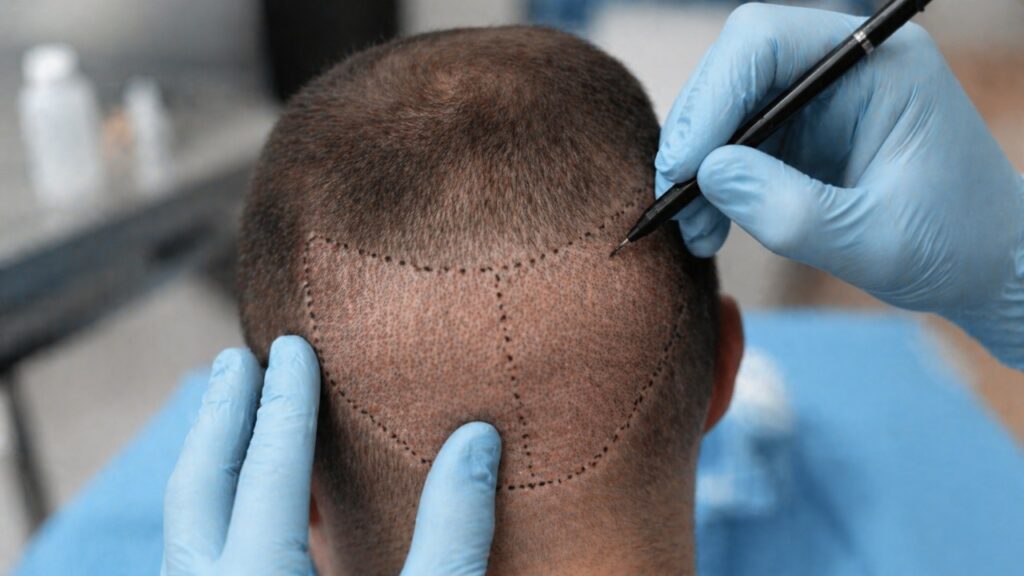
Fear of surgery is completely normal. The scalp is a highly sensitive area filled with nerve endings. When considering restorative surgery, the main obstacle for many patients is the fear of physical pain. You need absolute honesty about the physical sensations before booking a procedure. This post details exactly what you will feel in the surgical chair and during the recovery phase.
Medical technology has advanced significantly over the last decade. Modern procedures rely on advanced local anaesthesia, ensuring the patient remains fully awake without feeling sharp pain during the actual relocation of the follicles. Understanding these specific stages of physical sensation is the best way to eliminate surgical anxiety.
How Painful is Hair Transplant Surgery?
The process involves specific stages of physical sensation. While every patient has a different threshold, the use of professional numbing agents keeps discomfort at a minimum.
Local anaesthesia is applied at a fixed point in the schedule, which is explained in detail in our hair transplant treatment day guide.
The Local Anaesthesia Phase
The first step involves numbing the scalp. The specialist injects local anaesthesia into the donor area at the back of the head. Later, they numb the recipient area on top.
During this phase, patients typically notice:
- Quick pinpricks: A minor sting or a tight pinch at the injection site.
- Transient burning: A sensation that lasts for roughly two to three minutes as the medication enters the tissue.
- Rapid onset: The medication acts extremely fast to block nerve signals.
- Full numbing: After these initial minutes, the scalp goes completely quiet and heavy.
The Extraction and Implantation Phases
Is hair transplant surgery painful during the active steps? No. The surgical team extracts the grafts using microscopic punches. They then implant those roots into the bald areas. Because the anaesthesia effectively blocks all nerve signals to the brain:
- Patients only feel a dull pushing sensation or mechanical pressure.
- The scalp feels thick and heavy, often described as a “wooden” sensation.
- Many individuals fall asleep or listen to music during the session.
- Sharp pain remains at zero during the entire extraction and implantation process.
Is FUE Hair Transplant Painful?
Follicular Unit Extraction (FUE) is the standard technique used globally. The surgeon removes individual follicles from the back of the head. The implantation phase involves making hundreds of tiny channels in the skin using a microscopic sapphire blade.
While the anaesthesia prevents discomfort during the slicing, FUE involves specific healing characteristics:
- Incision sites: Hundreds of microscopic channels are created in the recipient area.
- Tissue trauma: This method involves a moderate amount of disruption to the skin.
- Tenderness: A slightly tender scalp is common once the numbing medication wears off.
Is DHI Hair Transplant Painful?
Direct Hair Implantation (DHI) uses a specialized pen tool known as the Choi Implanter. This tool bypasses the need to create pre-made channels. It often involves even less tissue trauma than standard FUE.
| Feature | FUE Hair Transplant | DHI Hair Transplant |
| Incision Tool | Sapphire or Steel Blade | Choi Implanter Pen |
| Puncture Method | Two-step (Incision then graft) | One-step (Simultaneous) |
| Tissue Trauma | Moderate | Minimal |
| Bleeding Level | Standard | Reduced |
| Recovery Speed | 7 to 10 Days | 3 to 5 Days |
The pen punctures the skin and drops the follicle simultaneously. This rapid, single motion causes minimal bleeding and significantly less post-operative discomfort.
How Painful is a Hair Transplant Afterwards?
The numbing effect wears off a few hours after the surgery finishes. How painful is a hair transplant during that first night? You will not experience agonizing pain, but rather a series of manageable healing sensations.
The First 24 Hours
The donor area at the back of the head often feels sore. It is comparable to a moderate sunburn. The skin has been punctured thousands of times and is naturally inflamed.
- Soreness management: Medical staff provide standard analgesics to dull the throbbing.
- Elevation: Sleeping with the head elevated on a travel pillow reduces pressure.
- Fluid control: Elevation helps prevent blood and anaesthetic fluid from rushing to the face.
Days 2 to 7: Tightness and Itching
The soreness fades rapidly. A new sensation replaces it entirely. Itching becomes the primary source of discomfort as the microscopic wounds heal and the skin tightens.
- Scab formation: Biological healing triggers a severe itch across the scalp.
- The No-Touch rule: You must never scratch the scalp, as this destroys grafts permanently.
- Soothing sprays: Clinical staff provide sterile saline sprays to hydrate the skin.
- Itch relief: Applying these sprays soothes the irritation without physical contact.
Weeks 2 to 4: The Shedding Phase
By the second week, the physical pain is entirely gone. The scabs fall off during your daily washing routine. The transplanted hairs will begin to shed during this time. This is a painless biological phase where the follicle simply goes to sleep beneath the skin.
The Psychology of Pain Management
Anxiety amplifies physical discomfort. A calm patient feels less pain than a terrified one. The clinical environment plays a massive role in your perception of pain.
- Professional settings: A quiet, sterile room helps lower your heart rate.
- Blood pressure: Lower stress levels keep the anaesthesia effective for longer.
- Expert focus: One specialist focusing on one patient prevents rushed movements.
Managing Discomfort Safely at Home
Standard pain relievers are usually enough to keep you comfortable. Clinical staff supply everything you need before you leave the surgical facility.
- Anti-inflammatory Medication: This helps reduce swelling around the forehead and eyes.
- Cold Compresses: Applying ice to the forehead stops swelling (never apply ice to the grafts).
- Resting: Avoiding heavy exercise prevents blood pressure spikes in the scalp.
The Hairtec Online-to-Delft Medical Pathway
Finding a safe, comfortable clinic shouldn’t be stressful. Hairtec operates a highly efficient online diagnostic model for UK patients.
Secure Digital Diagnostics
- Remote review: Submit scalp images through a secure digital portal.
- Graft calculation: Specialists calculate your requirements remotely.
- Suitability: The clinical team confirms your candidacy from your own home.
Premium Surgery in the Netherlands
Once your digital assessment is approved, travel is arranged to the Delft clinic.
- BIG-registered professionals: Surgery is performed by licensed Dutch experts.
- Individual care: A strict limit of one patient per specialist per day.
- Pain monitoring: Specialists monitor comfort levels and administer top-ups if needed.
Frequently Asked Questions About Hair Transplant Pain
Is a hair transplant painful?
The procedure itself is not painful. Local anaesthesia completely numbs the scalp. The only discomfort is the initial numbing injections, which feel like quick pinpricks for about two minutes.
How painful is a hair transplant during recovery?
Recovery involves mild soreness rather than sharp pain. The donor area feels like a sunburn for the first two days. Standard over-the-counter analgesics manage this soreness perfectly.
Is hair transplant surgery painful on the crown?
The crown can be slightly more sensitive to the anaesthesia injections than the frontal hairline. However, once the numbing medication takes effect, surgery on the crown is completely painless.
Does the donor area hurt more than the front?
Yes, typically. The back of the head is where the follicles are physically extracted. It usually feels tight and sore when you lay your head down on the first night.
What happens if the anaesthesia wears off during surgery?
You will not feel sudden pain. You will start to feel a slight tingling sensation. You simply tell the medical specialist, and they immediately administer more numbing medication.
How we reviewed this article:
Hairtec.co.uk has strict sourcing guidelines and relies on peer-reviewed studies, academic research institutions, and medical journals and associations. We only use quality, credible sources to ensure content accuracy and integrity. You can learn more about how we ensure our content is accurate and current by reading our editorial policy.
- Seager DJ, Simmons C (2002). Local anesthesia in hair transplantation. Dermatologic Surgery https://doi.org/10.1046/j.1524-4725.2002.01121.x
- Nusbaum BP (2004). Techniques to reduce pain associated with hair transplantation: optimizing anesthesia and analgesia. American Journal of Clinical Dermatology https://doi.org/10.2165/00128071-200405010-00003
- Mohmand MH, Ahmad M, Jabeen M (2021). Pain perception of a new Ahmad-Humayun solution for local anesthesia in hair transplantation. Journal of Cosmetic Dermatology https://doi.org/10.1111/jocd.13442
Our experts continually monitor the health and wellness space, and we update our articles when new information becomes available


