
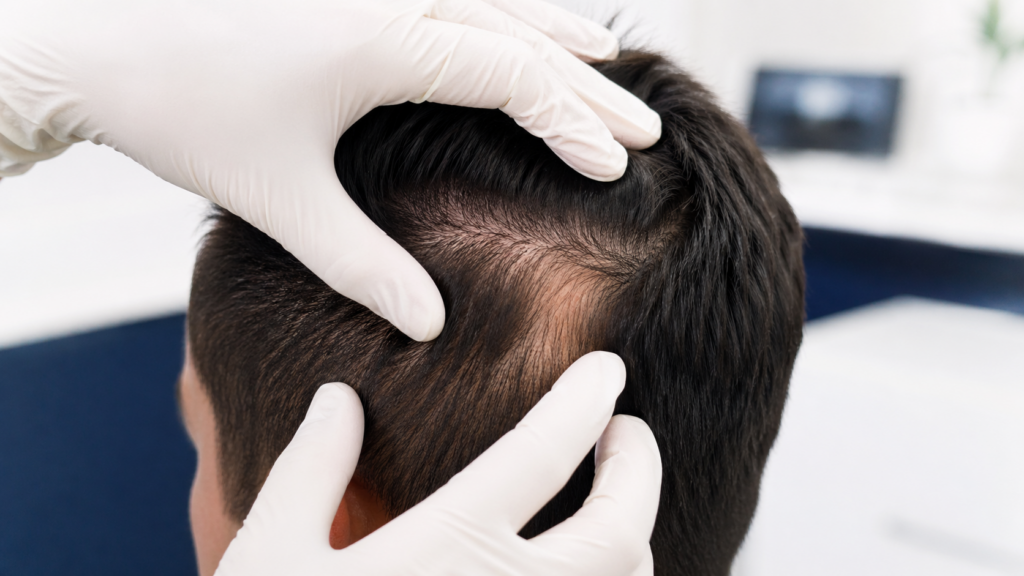
A bad hair transplant ruins more than just your hairline. It often leads to deep emotional distress and permanent damage to your scalp tissue. While hair restoration is successful when done by experts, the global boom in low cost clinics has caused a spike in failed surgeries. Most patients only realize the procedure was botched after a full year of healing, when they are left with a hairline that looks fake or a back of the head that looks thin and scarred.
Spotting a failed result early is the only way to build a real corrective plan. Revision surgery is a technical challenge that requires a much different approach than a first time transplant. For many UK patients, getting expert repair at a specialist facility like Hairtec in Delft, Netherlands, is the first step toward fixing these mistakes and getting back a natural look.
What Are The Common Signs Of A Bad Hair Transplant?
A bad hair transplant stands out because it looks fake. It does not match your face or your age. The most obvious sign is the “pluggy” look. This happens when hair follicles are grouped in big clusters instead of natural single units. It creates a doll hair effect that lacks the soft, irregular edge of a real hairline.
Other physical signs that your procedure was botched include:
- A hairline that is too straight or too low, making it look like a wig.
- Hair growing in the wrong direction or sticking straight out at odd angles.
- Deep visible scarring in the donor area or the front of the scalp.
- A moth eaten look at the back of the head because too many hairs were taken.
- Wide gaps between the new hairs that leave the scalp looking patchy.
- Pitting or bumps on the skin where the grafts were pushed in too deep.
Why Do Some Hair Transplants Look Unnatural?
Unnatural results happen because of bad planning and a lack of artistic skill. In cheap, unregulated clinics, the staff often draws a hairline using a plastic template. They do not look at your unique bone structure. This creates a robotic look that gets worse as you get older and your original hair continues to thin out around the transplant.
| Aspect | Professional Results | Bad Hair Transplant |
|---|---|---|
| Hairline Design | Irregular, soft, and age appropriate | Straight, symmetrical, or too low |
| Graft Angle | Follows natural exit angles | Chaotic or perpendicular growth |
| Density | Uniform and balanced across the scalp | Patchy, sparse, or clumped together |
| Donor Area | Preserved for any future needs | Overharvested and left depleted |
| Clinical Staff | Surgeon led during every step | Technician led with no doctor present |
Technical mistakes during the actual planting also lead to failure. If the grafts go too deep, they cause pitting or ridging. This makes the skin on your scalp look uneven and lumpy. If the grafts are too shallow, they do not get enough blood. This causes the hair to die before it even starts to grow, leaving you with thin results.
The Dangers Of Overharvesting And Donor Depletion
Overharvesting is the most dangerous complication of a bad hair transplant because you cannot undo it. The donor area at the back and sides of your head only has a limited number of hairs. When an untrained technician takes too many grafts too close together, they ruin the look of the back of your head forever.
This leaves you with a see through look. In the worst cases, the donor area becomes so thin that you cannot even use it for a second surgery to fix the first one. A real surgeon has a duty to protect your donor area. High volume hair mills ignore this duty just to give you a high graft count for a low price.
Can A Botched Hair Transplant Be Fixed?
Most bad hair transplants can be improved with the right revision surgery. The goal of a repair is to hide the bad work while adding density where it matters. Specialists use several different ways to fix the damage depending on what went wrong the first time.
Common ways to fix a botched job include:
- FUE Revision: Taking out the bad grafts one by one and putting them back in correctly.
- Hairline Softening: Putting very fine single hairs at the very front to hide a harsh line.
- Scar Camouflage: Planting new hair directly into old scars to hide them.
- Scalp Micropigmentation: Using medical ink to make a thin donor area look thicker.
- Body Hair Transplant: Using beard or chest hair if the back of your head is empty.
Corrective Restoration And Technical Repair Procedures At Hairtec Delft
Hairtec in Delft, Netherlands, focuses on the difficult work of hair transplant repair. We know how much a failed surgery hurts your confidence. Our medical team looks at exactly what went wrong and makes a plan to fix your look while saving whatever donor hair you have left.
UK patients come to our Delft clinic because they want a small, professional environment. They are tired of the high volume factories. Many find that UK clinics or cheap places abroad do not have the skills needed for a hard revision job. By coming to our facility in the Netherlands, you get access to advanced DHI and FUE tools in a strictly regulated Dutch medical setting.
Our repair work involves checking every graft angle and the symmetry of your hairline. We often do “plug removal.” This is where we take out the big clumps of hair, split them into smaller, natural pieces, and plant them again. This is how we fix that “doll hair” look. Our goal is a long term fix for patients who were let down by their first surgery.
How To Safely Coordinate Your Travel From The UK?
If you are coming from the UK to our clinic in Delft, we make the process easy. Most patients fly into Amsterdam Schiphol. From there, it is a quick train or car ride to Delft. We help you with travel and where to stay so you can just focus on getting fixed.
1. Online Consultation: You send us clear photos of your head for a first look.
2. Medical Analysis: We give you a full repair plan and a count of how many grafts you need.
3. Travel Planning: You book your flights and we help with the local details.
4. The Procedure: You have your revision surgery at our specialist clinic in Delft.
5. Aftercare: We give you a full plan for your flight back home and your recovery.
Medical Negligence And Legal Recourse
If your hair transplant was botched because of a mistake or bad hygiene, you might be able to claim compensation. Negligence happens when a clinic uses untrained staff or works in a dirty room. In the UK, lawyers who work on cosmetic surgery cases can help you get back the money you paid and the cost of your repair.
Taking legal action holds these bad clinics accountable. It helps stop other people from going through the same thing. Money does not fix the stress, but a successful claim pays for the high quality repair work you need in the Netherlands. You should talk to a legal expert as soon as you see your procedure has failed.
Frequently Asked Questions About Failed Procedures
How long does it take to see a failed result?
You have to wait a full twelve months to see the final growth.
Can a botched hairline be moved higher?
Yes we can remove the misplaced hairs with FUE and put them back in a better spot.
Is it possible to fix an overharvested donor area?
You cannot grow the hair back but you can hide the thinness with medical ink or body hair.
What is the success rate of revision surgery?
Success depends on how much donor hair you have left and how bad the scarring is.
Does body hair transplant work for repairs?
Beard and chest hair are great for adding thickness or hiding scars on the scalp.
Why choose a clinic in the Netherlands over the UK?
Patients choose our Delft clinic because we specialize in repairs and follow strict Dutch medical laws.
Can I sue a clinic for a bad result?
You can take legal action if the clinic was negligent or used unqualified staff for your surgery.
How we reviewed this article:
Hairtec.co.uk has strict sourcing guidelines and relies on peer-reviewed studies, academic research institutions, and medical journals and associations. We only use quality, credible sources to ensure content accuracy and integrity. You can learn more about how we ensure our content is accurate and current by reading our editorial policy.
- Shapiro R (2004). Principles and techniques used to create a natural hairline in surgical hair restoration. Facial Plastic Surgery Clinics of North America https://doi.org/10.1016/j.fsc.2003.12.004
- Nadimi S (2020). Complications with Hair Transplantation. Facial Plastic Surgery Clinics of North America https://doi.org/10.1016/j.fsc.2020.01.003
- Gómez-Zubiaur A, Mir-Bonafé JF, Muñoz Moreno-Arrones O et al. (2026). FUE for the repair of unnaturally designed or low hairlines in men with androgenetic alopecia. Frontiers in Medicine https://doi.org/10.3389/fmed.2026.1735251
Our experts continually monitor the health and wellness space, and we update our articles when new information becomes available


