
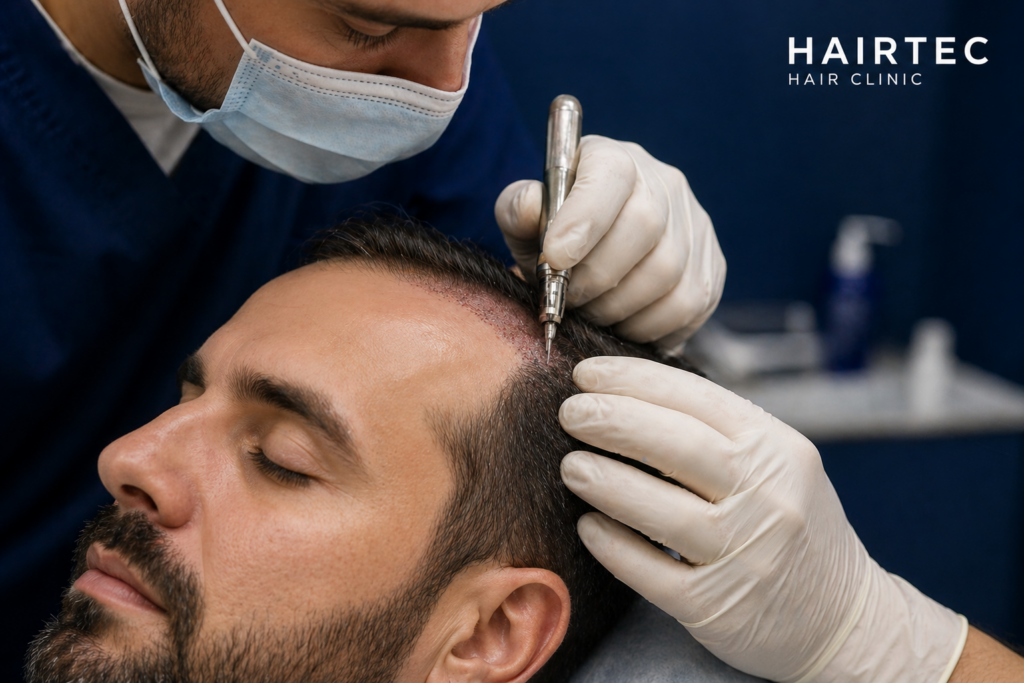
A hair transplant gone wrong causes deep emotional distress and permanent physical damage to the scalp. While modern methods are safe when performed by experts, the rise of low cost hair mills has led to an increase in poor results. Patients often deal with issues ranging from an unnatural appearance to severe medical complications like tissue death and donor area depletion.
Identifying a failed procedure early is the only way to limit long term damage. While a botched surgery feels like a permanent mistake, medical revision techniques can correct poor graft placement and scarring. Understanding why a procedure failed helps you choose a safer path for your corrective surgery.
The warning signs described below are the same ones that define a bad hair transplant, regardless of where the surgery was performed.
What Are The Early Signs Of A Failed Hair Transplant?
Recognizing the signs of a failed hair transplant early prevents further scalp damage. While some shedding is expected in the first few weeks, certain symptoms indicate a serious surgical error. You should monitor your scalp for the following red flags:
- Persistent Redness: Redness that lasts more than three or four months.
- Chronic Inflammation: Frequent infections or painful bumps around the graft sites.
- Poor Growth: No visible new hair growth after twelve months of healing.
- Unnatural Angles: Hair sticking straight out or growing in the wrong direction.
- Wide Scarring: Visible thick scars in the donor area or the recipient site.
If large areas of the recipient site remain bald after a year, the procedure was likely botched. Overharvesting in the donor area is another major indicator of failure, leaving the back of the head looking thin, patchy, or moth eaten.
Why Did My Hair Transplant Go Wrong?
Technical and clinical errors are the main reasons a hair transplant fails. Most problems stem from high volume clinics where technicians perform the entire surgery instead of qualified surgeons. This leads to poor graft handling and follicle death before the hair is even implanted.
| Factor | Successful Procedure | Botched Procedure |
|---|---|---|
| Surgeon Role | Surgeon performs all critical steps | Technicians perform the entire surgery |
| Graft Handling | Minimal time outside the body | Prolonged exposure leading to graft death |
| Extraction | Strategic spacing in donor area | Overharvesting and visible patches |
| Hairline Design | Irregular and age appropriate | Straight, low, and unnatural look |
| Environment | Regulated medical clinic | Poor hygiene in unlicensed facilities |
Incorrect graft placement is another frequent failure. Grafts placed too deeply cause a doll hair appearance or chronic inflammation. A qualified surgeon must identify poor candidates during the initial consultation to prevent these outcomes from the start.
Most of these cases remain correctable through a specialised hair transplant repair procedure performed by an experienced surgical team.
Can A Botched Hair Transplant Be Fixed?
Many cases of a failed hair transplant can be improved through specialist revision surgery. The goal is to hide the bad work while adding density where it matters most. Surgeons use several technical methods to correct the damage:
- Plug Removal: Extracting large clusters of hair and re-planting them as single units.
- Hairline Softening: Adding ultra fine single follicles to the front of a harsh line.
- Scar Revision: Planting hair directly into old scars to hide surgical marks.
- Scalp Micropigmentation: Using medical grade ink to hide donor area thinning.
- Body Hair Use: Using beard or chest hair if the scalp donor area is empty.
Repairing a botched job is more complex than a standard surgery. The specialist must work around scar tissue and manage a very limited supply of donor hair. A professional evaluation is needed to check if a repair is fysiologically possible.
Scalp Necrosis And Permanent Scarring After A Bad Procedure
Scalp necrosis is a horrific complication that happens when a hair transplant goes wrong. This occurs when the blood supply to the skin is cut off due to excessive graft density or bad technique. The skin tissue dies, leading to large scars that cannot grow hair and may require reconstructive surgery to fix.
Permanent scarring is a major risk in the donor area at the back of the head. When too many follicles are taken too close together, the skin cannot heal. This results in a thin, scarred look often caused by clinics that prioritize speed and high graft counts over the health of the patient.
What To Do If Your Hair Transplant Was Botched Abroad?
Many UK patients with a hair transplant gone wrong traveled to high volume clinics abroad for lower prices. These facilities often perform dozens of surgeries a day with no doctor involvement. If you are a victim of such a clinic, you should follow these steps:
1. Get a Professional Evaluation: Consult a specialist to assess the damage to your scalp.
2. Document the Damage: Take clear photos of the donor and recipient areas.
3. Gather Paperwork: Keep all communication and records from the first clinic.
4. Avoid “Free” Fixes: Do not return to the original clinic for a repair as they often cause more harm.
5. Seek Revision Expertise: Look for a clinic that focuses on complex repair cases rather than standard transplants.
For many in the UK, the best option is to seek specialist care in the Netherlands. By traveling to a boutique clinic in Delft, you can access higher medical standards and a surgeon led approach that focuses on fixing previous mistakes.
How To Choose A Safe Hair Transplant Clinic For Your Repair?
Choosing the right clinic is vital when fixing a botched result. While the UK has CQC regulations, many patients find that the best specialist repair work is done in the Netherlands. When vetting a clinic for your revision surgery, check the following:
- Surgeon Involvement: Ensure a qualified surgeon performs the actual extraction and implantation.
- Boutique Approach: Avoid clinics that treat more than one or İtwo patients per day.
- Specialist Results: Ask to see specific “before and after” photos of repair and revision cases.
- Fysiological Focus: The clinic should prioritize the health of your remaining donor hair.
A safe clinic will be honest about what can be achieved. If your donor area is too damaged, a reputable surgeon will tell you rather than taking your money for a procedure that will fail again.
Medical Negligence And Legal Rights For Failed Cosmetic Surgery
If your hair transplant was botched due to negligence, you may have grounds for a compensation claim. Negligence includes surgery in dirty conditions or errors made by staff who were not qualified. In the UK, lawyers who work on cosmetic surgery cases can help you get back the money you paid and the cost of your repair work.
Legal action helps stop these bad clinics from hurting more people. While money does not fix the stress, a successful claim pays for the high quality revision surgery you need. You must act quickly because there are strict time limits for filing medical negligence claims.
Corrective Restoration At Hairtec Delft
Hairtec specializes in the difficult work of fixing a hair transplant gone wrong. Our clinic is located in Delft, Netherlands, and we focus on patients who have been let down by high volume hair mills. We do not have a facility in the UK because we believe in a centralized, boutique medical environment where every patient gets our full attention.
UK patients fly into Amsterdam Schiphol and travel to our Delft facility for their revision surgery. We use advanced DHI and FUE tools to fix bad hairlines and hide surgical scars. Every repair case at Hairtec begins with a full analysis of your scalp fysiology. Our goal is a long term fix that restores your look and your confidence.
Frequently Asked Questions About Hair Transplant Failure
How long after a hair transplant can you tell if it failed?
You have to wait twelve to eighteen months to see the final growth and know for sure.
Can you have a second hair transplant if the first one was botched?
Yes, you can have a second procedure if you still have enough healthy donor hair left.
Is shock loss a sign of a failed procedure?
No, shock loss is temporary thinning and usually does not mean the surgery failed.
What does an overharvested donor area look like?
It looks thin and patchy with white spots or a moth eaten texture at the back of the head.
Can scalp micropigmentation hide a botched transplant?
Yes, medical ink can hide scars and make a thin donor area look much thicker.
Is it normal to have large scabs after a procedure?
Small scabs are normal but large or thick crusting could mean poor healing or bad technique.
Will revision surgery leave more scars?
An expert surgeon uses advanced tools to minimize new marks while hiding your old surgical scars.
How we reviewed this article:
Hairtec.co.uk has strict sourcing guidelines and relies on peer-reviewed studies, academic research institutions, and medical journals and associations. We only use quality, credible sources to ensure content accuracy and integrity. You can learn more about how we ensure our content is accurate and current by reading our editorial policy.
- Romera de Blas C, Vega Díez D, Ricart Vayá JM, Gómez Zubiaur A (2026). Complications in follicular unit excision hair transplantation: current evidence and practical approaches. Frontiers in Medicine https://doi.org/10.3389/fmed.2026.1750989
- Ceran F (2024). Recipient Site Necrosis After Follicular Unit Excision Technique for Hair Transplantation: Evaluation of 18 Patients. Aesthetic Plastic Surgery https://doi.org/10.1007/s00266-024-04305-6
- Gómez-Zubiaur A, Mir-Bonafé JF, Muñoz Moreno-Arrones O et al. (2026). FUE for the repair of unnaturally designed or low hairlines in men with androgenetic alopecia. Frontiers in Medicine https://doi.org/10.3389/fmed.2026.1735251
Our experts continually monitor the health and wellness space, and we update our articles when new information becomes available


