
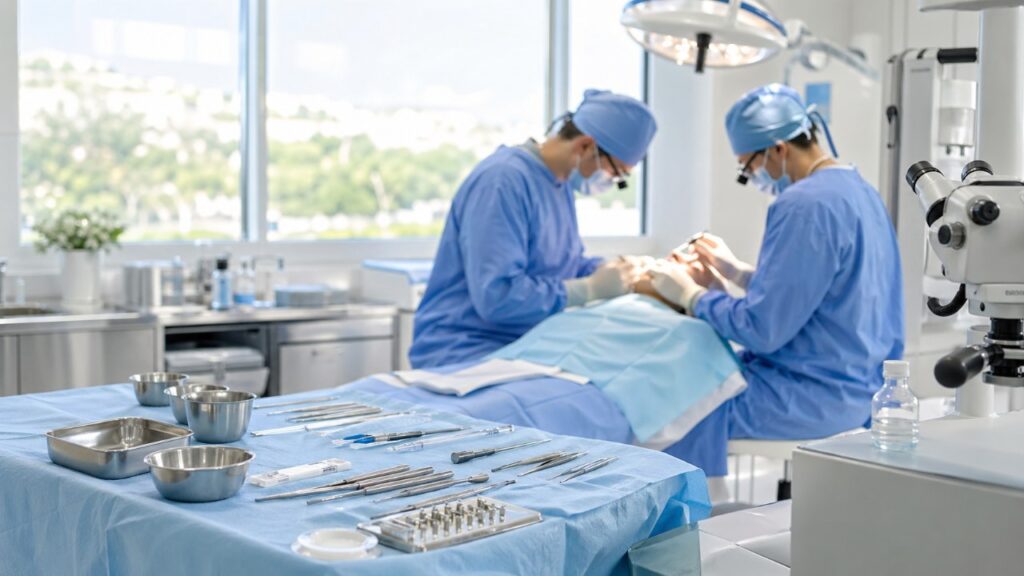
Safety is the first concern for any patient considering elective surgery. While hair restoration is a surface-level procedure, the term “hair transplant death rate” appears frequently in search results. This causes significant anxiety for men and women looking to fix their thinning hair. Understanding the statistical reality and the clinical safeguards required for a safe procedure is the only way to manage this fear.
Hair restoration is fundamentally a low-risk surgery. It does not involve deep tissue, major organs, or general anaesthesia. However, the global rise of unregulated “hair mills” has introduced new dangers. Most reported complications occur in environments where medical standards are ignored. This post analyzes the actual risks and explains how proper clinical protocols prevent fatal outcomes.
Is Hair Transplant Safe?
Medical professionals categorize hair transplants as minor outpatient surgeries. The procedure involves the skin and the uppermost layers of the scalp. Statistics from regulated European clinics show that the hair transplant death rate is nearly zero. When performed by licensed specialists, the safety profile is comparable to minor dental work.
A hair transplant is safe when specific medical criteria are met. The surgical team must monitor the patient’s vital signs constantly. The clinic must have emergency protocols in place for rare allergic reactions. Most importantly, the medical team must screen the patient’s health history before the surgery even begins.
Understanding the Hair Transplant Death Rate Male Statistics
The vast majority of hair transplant patients are male. Consequently, data regarding the hair transplant death rate male demographic is more prevalent. Fatalities in this field are extremely rare, often occurring at a rate of less than one in several hundred thousand procedures globally.
Most of these tragic cases are linked to specific clinical failures rather than the hair transplant technique itself.
- Inadequate Medical Screening: Patients with underlying heart conditions or undiagnosed allergies are sometimes cleared for surgery in low-cost, unregulated clinics.
- Anaesthesia Toxicity: Using excessive amounts of local numbing agents can lead to systemic toxicity. This impacts the central nervous system and the heart.
- Lack of Supervision: Many budget clinics allow technicians to perform surgery without a qualified doctor present. This leaves the patient vulnerable if a complication arises.
- Poor Emergency Equipment: Regulated clinics in the Netherlands maintain advanced life-support equipment. Unregulated “black market” facilities often lack basic emergency tools.
Common Hair Transplant Risks vs. Fatal Complications
Distinguishing between common side effects and life-threatening risks is vital. Most patients will experience minor issues that resolve within a week. Fatal complications are almost entirely preventable through strict adherence to European healthcare standards.
| Feature | Common Risks (Minor) | Major Risks (Rare/Severe) |
| Occurrence | Very High (Expected) | Extremely Low |
| Examples | Swelling, itching, minor redness | Anaphylaxis, cardiac arrest, severe infection |
| Duration | 3 to 7 days | Requires immediate hospitalization |
| Management | Cold compresses, rest, saline spray | Emergency medical intervention |
| Prevention | Proper aftercare | Rigorous pre-surgical medical screening |
Cardiovascular Stress and Local Anaesthesia
The primary medical risk during a hair transplant involves the use of local anaesthesia. While safer than general anaesthesia, local numbing agents still enter the bloodstream. If the dosage is too high, it can cause an irregular heartbeat or a drop in blood pressure.
Medical specialists must calculate the safe dosage based on the patient’s body weight and age. Dutch BIG-registered professionals follow strict pharmaceutical guidelines to prevent toxicity. Constant monitoring of heart rate and oxygen levels ensures that any physiological shift is detected immediately.
Understanding exactly what happens during the procedure removes most of this concern, as set out step by step in our hair transplant treatment day guide.
The Danger of Sepsis and Infection
Unsanitary surgical environments lead to infections. While most scalp infections are treatable with antibiotics, a severe, untreated infection can lead to sepsis. This is a life-threatening condition where the body’s response to infection damages its own tissues.
Clinics in Delft operate under rigorous European sterilization protocols. Single-use surgical tools and sterile air filtration systems eliminate the risk of cross-contamination. This level of hygiene is the cornerstone of patient safety.
How Hairtec Screens for Patient Safety
Safety begins long before the patient arrives at the clinic. Hairtec utilizes a digital-to-physical medical model to ensure every patient is fit for surgery.
Secure Online Medical Diagnostics
The screening process is entirely digital for UK patients. You do not need to travel to a physical office in London for your initial safety check.
- Digital Health Questionnaire: Patients provide a comprehensive medical history through a secure portal. This includes information on heart health, allergies, and current medications.
- Graft Calculation: Specialists review scalp images to determine the scope of the surgery. High-volume “mega sessions” are only approved for patients with excellent overall health.
- Risk Assessment: A medical specialist reviews the data to identify any potential contraindications. If a patient presents a high risk, the surgery is declined.
The Delft Clinical Standard
Once the online assessment is approved, the procedure takes place in our specialized facility in the Netherlands. The Dutch healthcare system is one of the most strictly regulated in the world.
Medical professionals at the Delft clinic are listed on the BIG-register. This Dutch statutory registry ensures that your surgeon has the required qualifications and a clean ethical record. The “one patient per day” rule further enhances safety. The specialist focuses entirely on your vitals and your surgical outcome without the distraction of multiple concurrent surgeries.
Hair Transplant Risks: Factors You Can Control
Patients play a significant role in their own safety. Following pre-operative and post-operative instructions reduces the likelihood of complications.
- Be Honest About Medications: Certain blood thinners or herbal supplements can increase bleeding during surgery. You must disclose all substances during your online consultation.
- Avoid Unregulated Medical Tourism: Low prices often indicate a lack of medical staff and emergency equipment. Choosing a BIG-registered facility in the Netherlands provides a much higher safety margin.
- Follow Post-Op Care: Managing the scalp correctly after surgery prevents infections. Using the provided sterile saline sprays and avoiding dirty environments is essential.
- Report Symptoms Early: If you experience unusual chest pain, extreme swelling, or a high fever after returning to the UK, you must contact medical professionals immediately.
Frequently Asked Questions About Hair Transplant Death Rate
Is hair transplant safe for older men?
Yes, provided the patient does not have severe cardiovascular issues. Older patients undergo a more rigorous digital screening process to ensure their heart can handle the duration of the surgery.
Can you die from a hair transplant?
While technically possible, it is incredibly rare in regulated medical environments. Deaths are almost exclusively linked to “black market” clinics that ignore anaesthesia limits and patient monitoring.
Is hair transplant safe for women?
The safety profile for women is identical to that of men. The procedure remains surface-level. Female patients also undergo the same online medical screening to confirm their suitability for local anaesthesia.
What are the most common hair transplant risks?
The most common risks are non-fatal. These include swelling around the eyes, itching during healing, and “shock loss,” where native hair thins temporarily after the procedure.
How does Hairtec handle emergencies?
The Delft clinic is equipped with emergency medical tools and staffed by professionals trained in advanced life support. Because the facility is in the Netherlands, it operates under strict European emergency response protocols.
How we reviewed this article:
Hairtec.co.uk has strict sourcing guidelines and relies on peer-reviewed studies, academic research institutions, and medical journals and associations. We only use quality, credible sources to ensure content accuracy and integrity. You can learn more about how we ensure our content is accurate and current by reading our editorial policy.
- Garg AK, Garg S (2021). Complications of Hair Transplant Procedures - Causes and Management. Indian Journal of Plastic Surgery https://pmc.ncbi.nlm.nih.gov/articles/PMC8719980/
- Salanitri S, Gonçalves AJ, Helene A Jr, Lopes FH (2009). Surgical complications in hair transplantation: a series of 533 procedures. Aesthetic Surgery Journal https://doi.org/10.1016/j.asj.2008.11.005
- Mysore V, Kumaresan M, Garg A et al. (2021). Hair Transplant Practice Guidelines. Journal of Cutaneous and Aesthetic Surgery https://jcasonline.com/hair-transplant-practice-guidelines/
Our experts continually monitor the health and wellness space, and we update our articles when new information becomes available


