
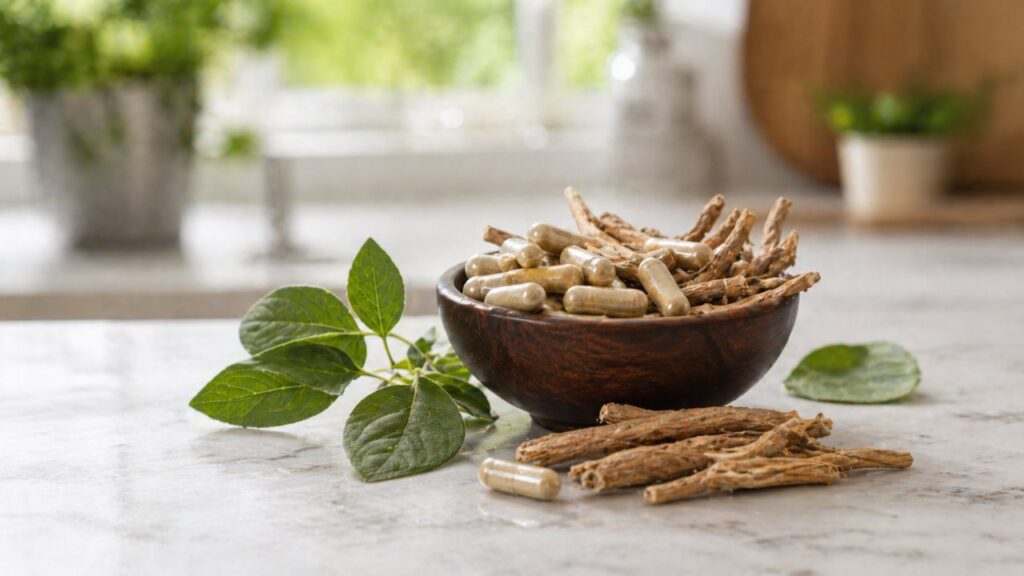
Natural supplements often promise significant benefits for stress and physical performance. Ashwagandha, an ancient herb from Ayurvedic medicine, has become incredibly popular in the UK for its adaptogenic properties. However, as its usage increases, so do the questions regarding its side effects. Many users now ask a specific question: does ashwagandha cause hair loss?
Understanding the link between herbal supplements and hair health is vital for anyone noticing changes in their hair density. While some claim this herb causes shedding, others suggest it actually promotes growth. This post analyzes the biological relationship between this supplement and the scalp, exploring its impact on both men and women.
What is Ashwagandha?
Ashwagandha is a medicinal herb classified as an adaptogen. Its primary biological function is to help the body manage stress by modulating cortisol levels. High cortisol is a known trigger for telogen effluvium, a temporary type of hair shedding. By lowering stress hormones, the supplement should, in theory, support hair health rather than damage it.
Despite these benefits, reports of thinning hair while taking the supplement have surfaced. These reports often lead people to wonder if taking ashwagandha cause hair loss directly or if other hormonal factors are at play.
Does Ashwagandha Cause Hair Loss in Men?
The debate regarding men often focuses on testosterone. Ashwagandha is known to naturally boost testosterone levels in males. This is a primary reason for its popularity in fitness communities. However, this increase in testosterone brings a potential side effect for those genetically predisposed to balding.
- The DHT Connection: Testosterone is converted into Dihydrotestosterone (DHT) by the enzyme 5-alpha reductase.
- Follicle Sensitivity: In men with Male Pattern Baldness, hair follicles are hypersensitive to DHT.
- Miniaturisation: Higher DHT levels can accelerate the shrinking of hair follicles on the scalp.
Does ashwagandha cause hair loss in men? There is no direct clinical evidence that the herb kills hair follicles. However, if a man is already losing hair due to genetics, a significant boost in testosterone could theoretically increase DHT levels. This might accelerate the existing thinning process. For men without the “balding gene,” the supplement is unlikely to cause any issues.
Does Ashwagandha Cause Hair Loss in Women?
Female hair loss is often more complex, involving a delicate balance of oestrogen, progesterone, and androgens. Many women use adaptogens to manage the symptoms of stress or conditions like PCOS.
Does ashwagandha cause hair loss in women? Generally, it is considered safe and even beneficial for female hair. By reducing cortisol, it can prevent stress-related shedding. However, because it can slightly increase testosterone, women with androgen-sensitive conditions should be cautious.
| Impact Category | Potential Benefit | Potential Risk |
| Stress Levels | Dramatically lowers cortisol. | None. |
| Scalp Health | Anti-inflammatory properties. | None. |
| Hormonal Balance | Supports thyroid function. | May increase androgens in some cases. |
| Hair Cycle | Prevents stress-induced shedding. | Could trigger sensitivity in DHT-prone scalps. |
For most women, the herb helps maintain a healthy hair growth cycle by providing a stable, low-stress internal environment. If shedding occurs, it is usually temporary or linked to a different underlying hormonal shift.
Analyzing the “Shedding” Reports
If the herb is generally beneficial, why do some people report hair fall? Several biological factors could explain why someone might think does taking ashwagandha cause hair loss.
- Initial Hormonal Adjustment: When starting a powerful adaptogen, the body goes through a transition period. This shift in the endocrine system can sometimes trigger a minor, temporary shed.
- Thyroid Stimulation: The herb is known to stimulate the thyroid gland. While this is great for hypothyroidism, an overactive thyroid (hyperthyroidism) can lead to thinning hair.
- Correlation vs. Causation: Many people start taking stress supplements because they are already under intense pressure. Stress itself causes hair loss. The shedding might be the result of the stress that led them to the supplement in the first place.
Clinical Research and Evidence
Current scientific literature does not support the idea that this herb is a direct cause of permanent hair loss. Most studies focus on its ability to improve the quality of life and reduce physiological stress markers.
Actually, some research suggests it may improve scalp circulation. Better blood flow means more oxygen and nutrients reach the follicles. For many, this results in thicker hair shafts and a longer growth phase.
When to Seek a Professional Assessment
If you notice significant thinning while taking any supplement, a professional evaluation is necessary. Hair loss is rarely caused by a single herb. It is usually a combination of genetics, lifestyle, and internal health.
The Role of Digital Diagnostics
UK patients often struggle to find clear answers regarding their thinning hair. Hairtec provides a streamlined online model to help identify the root cause of hair loss without the need for a physical clinic visit in London.
- Secure Photo Submission: You submit clear images of your scalp through a digital portal.
- Medical Review: Specialists review your health history and supplement use digitally.
- Graft Calculation: If the thinning has progressed to permanent loss, specialists calculate the requirements for a restorative procedure.
- Personalised Advice: You receive clinical guidance on whether to continue your supplement routine or seek surgical restoration.
Surgical Solutions in Delft
If hair loss is permanent and genetic, supplements will not regrow the hair. In these cases, Direct Hair Implantation (DHI) at our specialised facility in Delft is the most effective path.
Dutch BIG-registered specialists perform these procedures under strict European standards. The “one patient per day” rule ensures that every graft is handled with extreme care. Whether the loss was accelerated by hormones or stress, the surgical team focuses on restoring natural density and a healthy hairline.
Frequently Asked Questions About Ashwagandha and Hair Loss
Does taking ashwagandha cause hair loss permanently?
No. There is no evidence that it causes permanent damage to hair follicles. Any shedding reported is usually temporary or linked to an underlying hormonal condition.
Can ashwagandha regrow hair?
It can help indirectly. By lowering cortisol, it prevents telogen effluvium (stress-induced shedding). It does not “cure” genetic baldness, but it supports a healthier environment for hair to grow.
Should I stop taking ashwagandha if my hair is thinning?
If you suspect the supplement is affecting your hormones, it is wise to pause and consult a professional. A digital scalp assessment can help determine if the thinning is genetic or related to temporary factors.
How long does it take for hair to recover after a supplement-related shed?
If a supplement triggers a minor shed, the hair usually returns to its normal cycle within three to six months once the body stabilizes or the supplement is stopped.
Is it safe to use after a hair transplant?
Yes, but only after the initial healing phase. You should always discuss your supplement routine with your surgical team during your online follow-up sessions.
How we reviewed this article:
Hairtec.co.uk has strict sourcing guidelines and relies on peer-reviewed studies, academic research institutions, and medical journals and associations. We only use quality, credible sources to ensure content accuracy and integrity. You can learn more about how we ensure our content is accurate and current by reading our editorial policy.
- Yerram C, Jillella A, Reddy V (2023). Effects of Withania somnifera root extract serum application on hair health in healthy adults: A prospective, double-blind, randomized, parallel, placebo-controlled study. Journal of Ayurveda and Integrative Medicine https://pmc.ncbi.nlm.nih.gov/articles/PMC10709127/
- Lopresti AL, Drummond PD, Smith SJ (2019). A Randomized, Double-Blind, Placebo-Controlled, Crossover Study Examining the Hormonal and Vitality Effects of Ashwagandha (Withania somnifera) in Aging, Overweight Males. American Journal of Men's Health https://pmc.ncbi.nlm.nih.gov/articles/PMC6438434/
- Thom E (2016). Stress and the Hair Growth Cycle: Cortisol-Induced Hair Growth Disruption. Journal of Drugs in Dermatology https://pubmed.ncbi.nlm.nih.gov/27538002/
Our experts continually monitor the health and wellness space, and we update our articles when new information becomes available


